
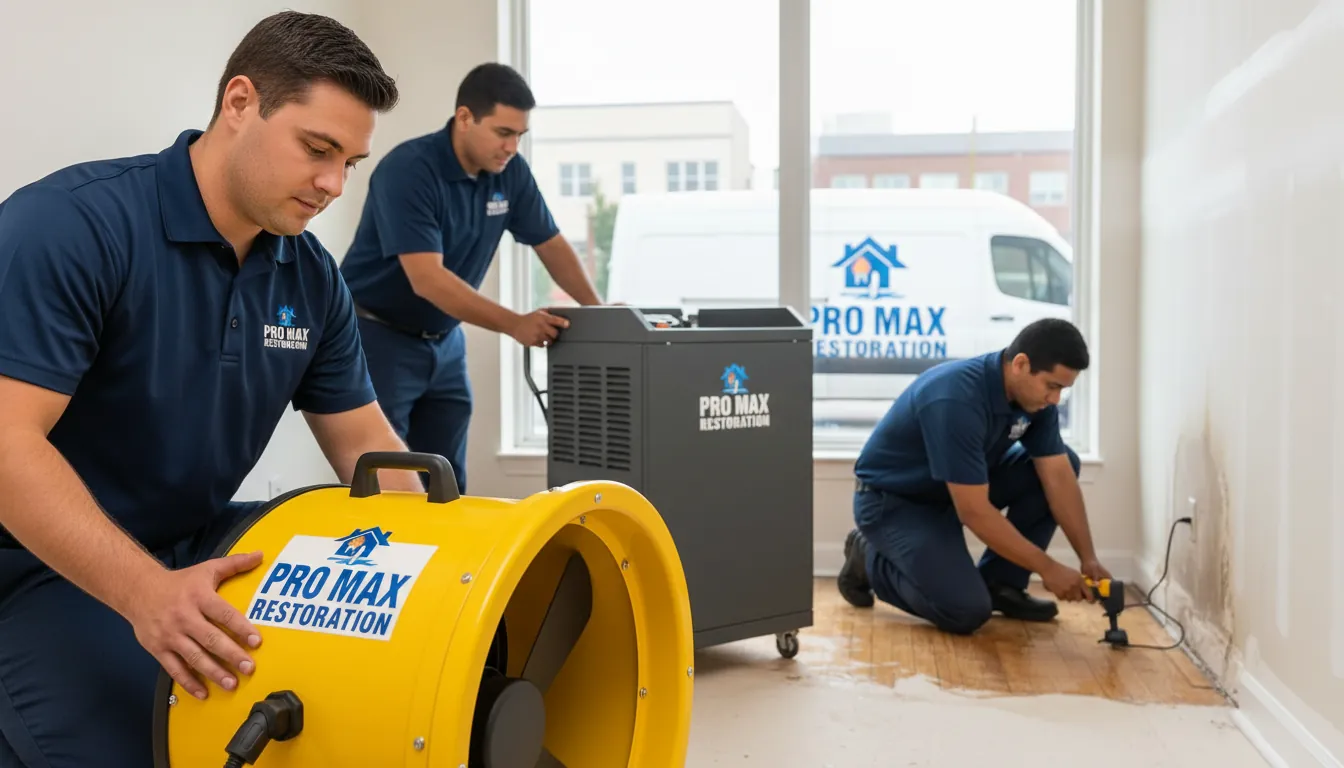
Flooded Basement Cleanup in Toronto
45-minute emergency response across Toronto & GTA. IICRC-certified extraction, drying, and complete basement restoration — from cleanup to rebuild.
Years Experience
Projects Completed
Minute Response
Google Rating
What Our Flooded Basement Cleanup Service Includes
Every flooded basement cleanup project is unique — here's the full scope of what we handle for Toronto and GTA properties.
Flooded Basement Cleanup in Action
See our certified team delivering professional flooded basement cleanup services across Toronto and the GTA.
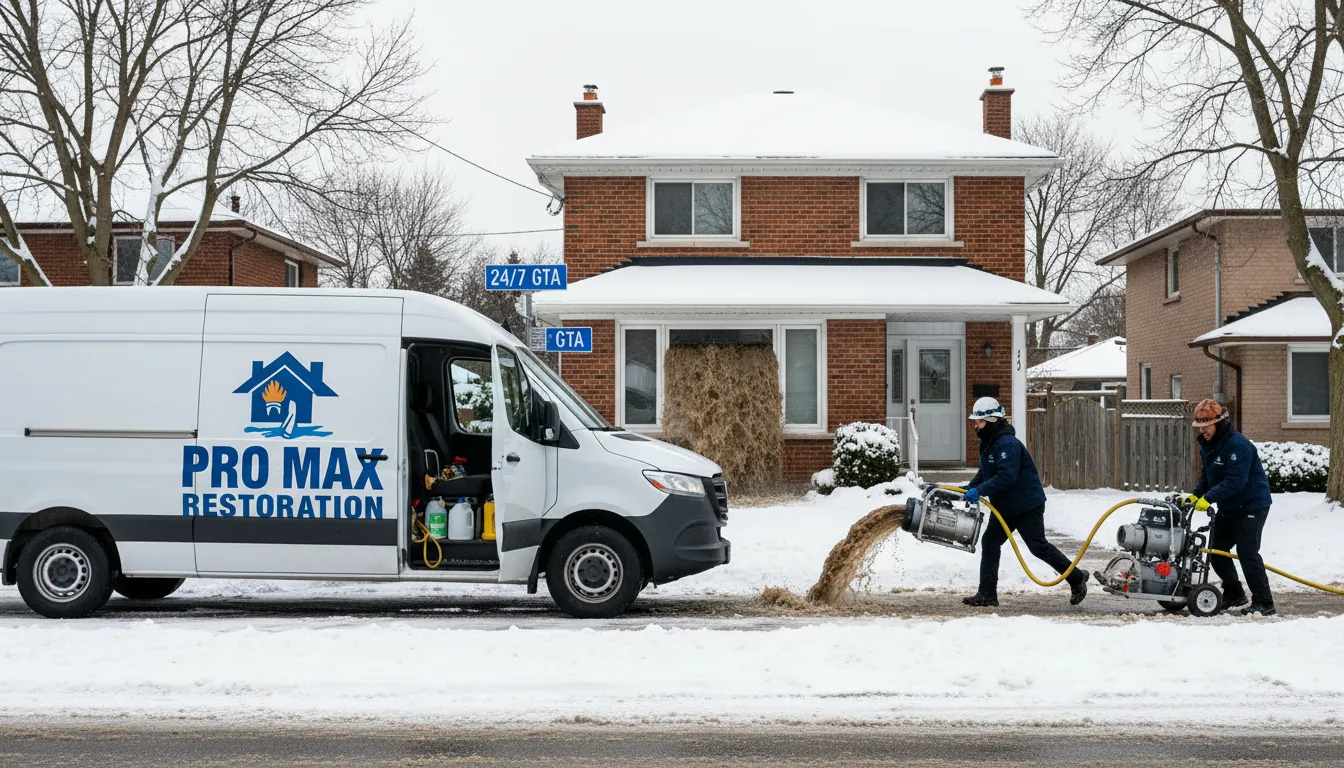
Our Flooded Basement Cleanup Process
Step-by-step breakdown of how our team handles flooded basement cleanup from initial call to final walkthrough.
Emergency Contact & Dispatch
Call 416-988-3539 any time — our dispatch team assesses the situation over the phone, advises immediate safety steps (power shutoff, gas check), and mobilizes the nearest crew. Average arrival time: 45 minutes across Toronto and the GTA.
Safety Assessment & Water Classification
Before any equipment enters your home, our lead technician performs a safety check (electrical hazards, structural integrity, gas leaks) and classifies the water per IICRC S500 standards — Category 1 (clean), Category 2 (grey), or Category 3 (black/sewage) — which determines the entire scope of remediation.
Rapid Water Extraction
Truck-mounted vacuum units extract standing water at 30+ gallons per minute. Submersible pumps handle deep water situations (6"+). Weighted extraction tools pull moisture from carpet and padding. Our goal: remove 95%+ of standing water within the first 2–4 hours.
Structural Drying & Dehumidification
Strategic placement of commercial air movers (1 per 10–12 linear feet of wall) and LGR dehumidifiers creates a controlled drying environment. Daily moisture readings using pin-type and non-invasive meters track progress until materials reach the target moisture content of ≤15% — typically achieved in 3–5 days.
Disinfection, Mold Prevention & Air Quality
EPA-registered antimicrobial agents are applied to all affected surfaces. For Category 3 (sewer) floods, contaminated porous materials are removed and disposed of per Ontario environmental regulations. HEPA air scrubbers run continuously to capture airborne spores and particulates, restoring indoor air quality.
Complete Restoration & Waterproofing
We rebuild everything we had to remove — new drywall, insulation, baseboards, flooring, and paint matched to existing finishes. We also address the root cause: crack injection, sump pump upgrades, backwater valve installation, or exterior waterproofing to ensure the same flood doesn't happen twice.
Why Toronto Basements Flood More Than Anywhere Else in Ontario
Toronto's combination of aging combined sewers, clay soil, rising groundwater tables, and increasingly intense rainfall events makes basement flooding the single most common insurance claim in the GTA. Over 30% of all Canadian flood damage claims originate from Ontario's urban belt — and Toronto homeowners bear the brunt.
Combined Sewer Surcharging
Much of Toronto — including Leslieville, The Beaches, High Park, and parts of Midtown — still relies on combined sewer systems where stormwater and sanitary sewage share a single pipe. During heavy rainfall, these pipes exceed capacity and raw sewage backs up through floor drains into basements. The City's $3.5 billion Wet Weather Flow Management Plan is decades from completion.
Spring Thaw Overland Flooding
When Toronto's average 108 cm of annual snowfall melts rapidly during March–April warm spells, the frozen ground cannot absorb the runoff. Low-lying properties in the Don Valley corridor, Rockcliffe-Smythe, Humber Bay, and South Etobicoke experience the highest risk, with overland water entering through window wells, foundation cracks, and garage thresholds.
Aging Foundation Infrastructure
Over 45% of Toronto homes were built before 1975 with rubble-stone or poured concrete foundations, clay weeping tiles, and tar-based waterproofing membranes. These systems have a 25–30 year lifespan — meaning most are decades past their effective service life. Foundation wall cracks allow hydrostatic groundwater pressure to push water directly into finished basements.
Failed Sump Pumps & Backwater Valves
A sump pump with no battery backup will fail the moment a storm knocks out power — exactly when you need it most. Our emergency data shows that 38% of our basement flood calls involve a sump pump failure, and another 22% involve homes without a functional backwater valve. Toronto's mandatory backwater valve program still has thousands of homes non-compliant.
Extreme Rainfall Intensification
Climate data shows Toronto now experiences 15–20% more intense rainfall events compared to 1990 baselines. The July 2013 storm dumped 126 mm in two hours — double the capacity of Toronto's drainage infrastructure. The August 2018 and July 2024 storms caused similar widespread basement flooding across Scarborough, North York, and East York.
Appliance & Plumbing Failures
Hot water tanks (40–60 gallon catastrophic failures), washing machine supply hoses, dishwasher connections, and frozen supply lines account for 35% of our basement flood responses. These interior floods often go undetected for hours in finished basements, allowing water to saturate drywall, subfloor, and insulation behind walls before the homeowner notices.
Understanding Water Categories in Basement Flooding
Not all basement floods are equal. The IICRC S500 standard classifies flood water into three categories that determine the scope of cleanup, health risks, and restoration methods required. As IICRC-certified technicians, we classify every basement flood accurately to ensure proper remediation.
Category 1 — Clean Water
Category 2 — Grey Water
Category 3 — Black Water
Critical 48-Hour Timeline
Every hour matters after a basement flood. Within 24 hours, mold spores begin colonizing damp drywall and organic materials. By 48 hours, active mold growth is visible and Category 1 water degrades to Category 2. After 72 hours, structural wood begins to warp and delaminate, and Category 2 water becomes Category 3. Our 45-minute emergency response ensures we begin water extraction before this cascade accelerates — saving you thousands in additional remediation costs.
Navigating Insurance for Basement Flooding in Toronto
Insurance coverage for basement flooding is one of the most misunderstood areas for Toronto homeowners. Many assume their standard homeowner's policy covers all types of basement water damage — but the reality is far more nuanced, and coverage gaps cost GTA families thousands every year.
Typically Covered
- ✓ Sudden pipe bursts (supply lines, hot water tanks)
- ✓ Accidental appliance failures (washing machines, dishwashers)
- ✓ Sewer backup (if endorsed — typically $5,000–$50,000 sublimit)
- ✓ Overland water coverage (if endorsed — available since 2015 from most carriers)
- ✓ Emergency mitigation costs (extraction, drying, temporary accommodation)
Commonly Excluded
- ✗ Gradual seepage or chronic moisture (classified as maintenance)
- ✗ Foundation waterproofing failure (wear and deterioration)
- ✗ Sewer backup without the endorsement (costs $30–$80/year to add)
- ✗ Flood damage from rising water tables without overland endorsement
- ✗ Damage from lack of maintenance (clogged weeping tiles, failed sump pump)
How Pro Max Restoration Maximizes Your Claim
We've processed over 1,200 insurance claims with every major Canadian carrier — Intact, Aviva, TD Insurance, Wawanesa, Co-operators, Desjardins, and Economical. Our documentation package includes time-stamped photo evidence, moisture mapping reports, IICRC-standard scope of work, and detailed line-item estimates that adjusters recognize and approve efficiently.
Pro tip: Before calling your insurer, call us first. We document everything from the moment we arrive — this initial evidence is critical for claim approval and often the difference between a $15,000 approved claim and a denied one. We also identify whether your loss falls under sewer backup, overland water, or sudden/accidental categories, ensuring your claim is filed under the correct coverage for maximum reimbursement.
Toronto Neighbourhood Basement Flood Risk Guide
After responding to thousands of basement floods across the GTA, we've mapped the neighbourhoods and conditions that create the highest risk. If your home is in one of these areas, proactive waterproofing and a properly maintained sump system can prevent thousands in damage.
East York & The Danforth
Combined sewers built in the 1920s–1950s are severely undersized for modern rainfall intensity. Dense clay soil prevents natural drainage. Homes along Coxwell, Woodbine, and Greenwood corridors are repeat flood zones — some properties have experienced 3+ basement floods in the past decade.
Scarborough (Highland Creek, Malvern)
Aging 1960s–70s housing stock with original clay weeping tiles and no backwater valves. Highland Creek floodplain properties face combined river flooding and sewer surcharge risk. Many homes have finished basements built before modern waterproofing standards existed.
North York (Don Mills, Willowdale)
Post-war bungalows and split-levels with shallow foundations and aging drain systems. Properties near the Don River tributaries face elevated groundwater during spring thaw. Willowdale's rapid densification has increased impervious surface area, sending more runoff toward older homes.
Etobicoke South (Mimico, Long Branch)
Lakefront proximity means high water tables year-round. Combined sewer infrastructure in Mimico is some of the oldest in the city. Homes between Royal York and Park Lawn are in a well-documented flood-prone area that the City has flagged for infrastructure upgrades.
Leslieville & The Beaches
Victorian and Edwardian-era homes with rubble stone foundations and legacy drainage. Queen Street East corridor properties face sewer capacity issues during storms. Many homeowners have invested in interior weeping tile and sump pump systems after the 2013 flood event.
Mississauga (Port Credit, Cooksville)
Newer separated sewer systems reduce backup risk, but 1970s–80s homes in Cooksville and Lakeview still have aging drainage infrastructure. Credit River corridor properties face overland flood risk during rapid snowmelt and heavy rainfall events.
Free Basement Flood Risk Assessment
Not sure if your basement is at risk? Pro Max Restoration offers complimentary basement flood risk assessments for Toronto and GTA homeowners. Our technicians inspect your foundation, weeping tile system, sump pump, backwater valve, and grading to identify vulnerabilities before they become emergencies. Call 416-988-3539 to schedule your free assessment.
Related Services
Basement Flooding? We're On Our Way in 45 Minutes
Our certified technicians arrive on-site within 45 minutes. Don't wait—call now for immediate assistance.