
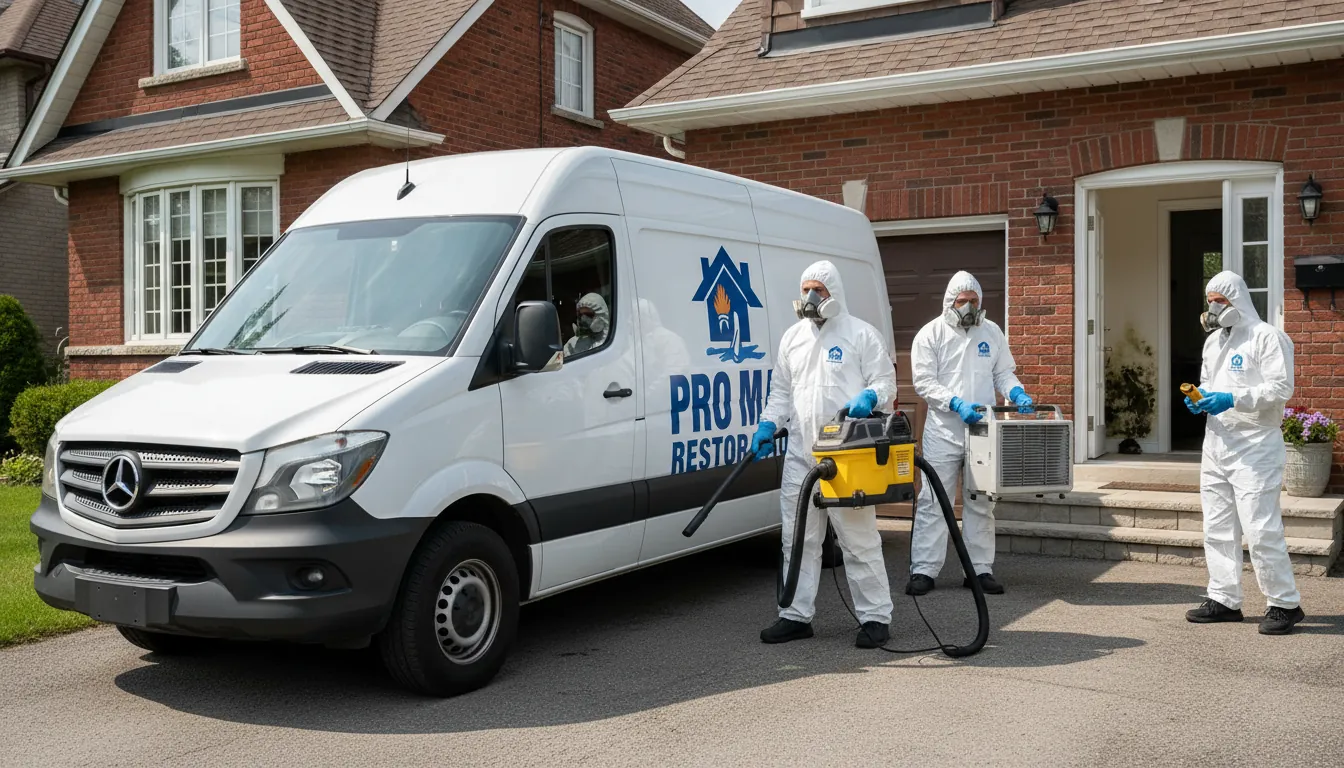
Certified Mold Removal & Remediation in Toronto
IICRC S-520 certified mold inspection, containment, and safe removal. From small patches to full black mold remediation with third-party clearance testing.
Years Experience
Projects Completed
Minute Response
Google Rating
What Our Mold Removal Service Includes
Every mold removal project is unique — here's the full scope of what we handle for Toronto and GTA properties.
Mold Removal in Action
See our certified team delivering professional mold removal services across Toronto and the GTA.
Our Mold Removal Process
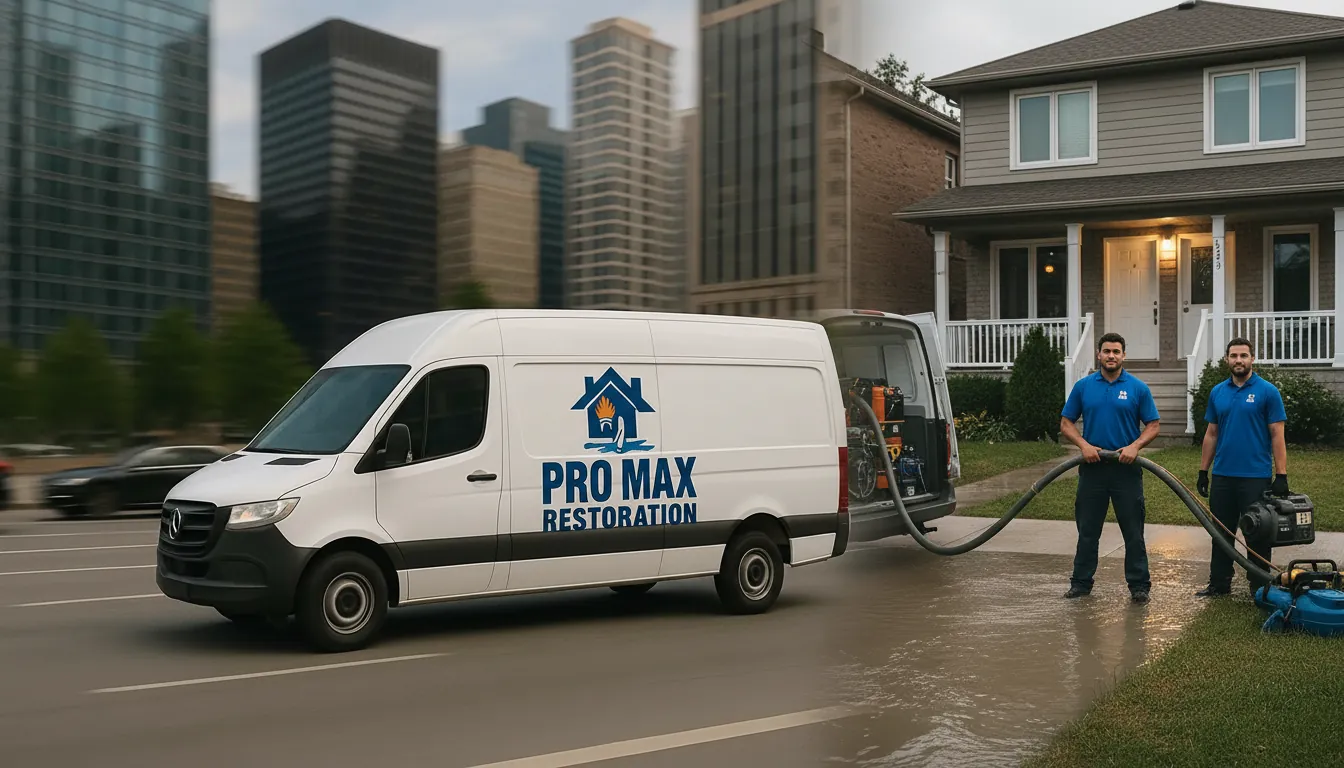
Step-by-step breakdown of how our team handles mold removal from initial call to final walkthrough.
Comprehensive Mold Inspection
Visual inspection, thermal imaging scan of walls/ceilings/floors, and air quality sampling to identify all mold sources, species, and contamination extent. Free for Toronto & GTA homeowners.
Lab Analysis & Remediation Plan
Air and surface samples sent to accredited Ontario lab for species identification. We develop a detailed IICRC S-520 compliant remediation plan with scope, timeline, and cost estimate.
Containment & Air Scrubbing
Physical polyethylene barriers and negative air machines create sealed containment zones. Industrial HEPA air scrubbers filter 99.97% of airborne spores to prevent cross-contamination.
Safe Mold Removal
Technicians in full PPE remove contaminated materials following IICRC S-520 protocols. EPA-registered antimicrobial fogging eliminates residual spores on all surfaces.
Drying & Source Correction
Industrial dehumidifiers and air movers dry all affected areas to IICRC target moisture levels. We identify and correct the original moisture source—leaks, ventilation, waterproofing—to prevent recurrence.
Clearance Testing & Restoration
Independent third-party air quality testing confirms spore counts are at safe background levels. We then restore walls, flooring, and finishes to pre-contamination condition with full warranty.
Understanding Mold Categories & Health Risks
Not all mold is the same. Understanding the type of mold in your home determines the remediation protocol, health precautions, and urgency of removal.
Allergenic Molds
Risk: ModerateCommon Types: Alternaria, Cladosporium, Aspergillus
The most common molds in Toronto homes, found on bathroom tiles, windowsills, and basement walls. Trigger allergic reactions, asthma attacks, and respiratory irritation. Especially dangerous for children, elderly, and immunocompromised individuals.
Remediation Protocol:
HEPA vacuuming, antimicrobial treatment, ventilation improvement. Typically 1–2 day remediation.
Pathogenic Molds
Risk: HighCommon Types: Aspergillus fumigatus, Cryptococcus
Can cause serious infections in people with weakened immune systems. Found in HVAC ducts, water-damaged drywall, and carpeting. Requires professional containment and removal—DIY cleaning spreads spores and worsens contamination.
Remediation Protocol:
Negative pressure containment, HEPA air scrubbing, full material removal, antimicrobial fogging. 2–4 day remediation.
Toxigenic Molds
Risk: SevereCommon Types: Stachybotrys (Black Mold), Chaetomium
Produces mycotoxins that cause neurological symptoms, chronic respiratory disease, and immune suppression. Black mold requires IICRC S-520 Level 3 remediation with full PPE, sealed containment, and air clearance testing before reoccupancy.
Remediation Protocol:
Full containment, PPE Level C minimum, HEPA filtration, material removal to structural elements, third-party clearance testing. 3–7 day remediation.
Mold Removal Cost Guide for Toronto & the GTA (2024\u20132025)
Transparent pricing based on contamination scope, mold category, and property type. All estimates include inspection, remediation, and clearance testing.
Minor
Under 10 sq ft
$500 – $1,500
Timeline: 1 day
Small bathroom, windowsill, or closet mold. HEPA vacuuming, antimicrobial treatment, and ventilation advice.
Moderate
10–50 sq ft
$1,500 – $4,000
Timeline: 1–2 days
Basement wall section, bathroom ceiling, or HVAC duct contamination. Containment, material removal, and HEPA scrubbing.
Significant
50–200 sq ft
$4,000 – $10,000
Timeline: 2–4 days
Full basement, attic, or multi-room contamination. Full containment, material gutting, air scrubbing, and clearance testing.
Extensive
200+ sq ft
$10,000–$25,000+
Timeline: 4–7+ days
Whole-home contamination, black mold, or commercial property. IICRC S-520 Level 3 protocol with third-party lab clearance.
Most homeowner insurance policies cover mold remediation when caused by a \u201csudden and accidental\u201d water event. We provide direct insurance billing with full Xactimate documentation.
Mold Risk by Toronto Neighbourhood
Different areas of the GTA face different mold risk factors based on housing age, infrastructure, and local conditions.
East York & Danforth
Pre-1950s homes with stone foundations, poor drainage, and no weeping tile. Basement moisture issues are endemic—we see more black mold remediation here than any other Toronto neighbourhood.
Scarborough
1960s–80s split-level homes with aging sump pumps, original cast-iron plumbing, and inadequate attic ventilation. Attic mold from ice damming is a major issue in winter months.
North York & Willowdale
Mixed housing stock with many 1970s townhomes and newer condos. Older homes have bathroom ventilation issues; condos face HVAC duct contamination from shared systems.
Etobicoke & Mississauga
Lakeside properties face higher humidity, while 1980s–90s homes often have original windows that create condensation points and hidden mold behind frames.
Brampton & Vaughan
Newer construction (post-2000) with energy-efficient building envelopes that trap moisture when not properly ventilated. Basement mold from construction moisture is common in homes under 10 years old.
Downtown Toronto
Victorian-era rowhouses, century homes, and aging condo buildings. Shared walls trap moisture, heritage buildings resist modern waterproofing, and basement apartments frequently have concealed mold.
Suspect Mold in Your Toronto Home? Get a Free Inspection
Our certified technicians arrive on-site within 45 minutes. Don't wait—call now for immediate assistance.