
Who Pays for Water Damage in a Toronto Condo?
Written & reviewed by the Pro Max Restoration Technical Team
IICRC-Certified Restoration Technicians
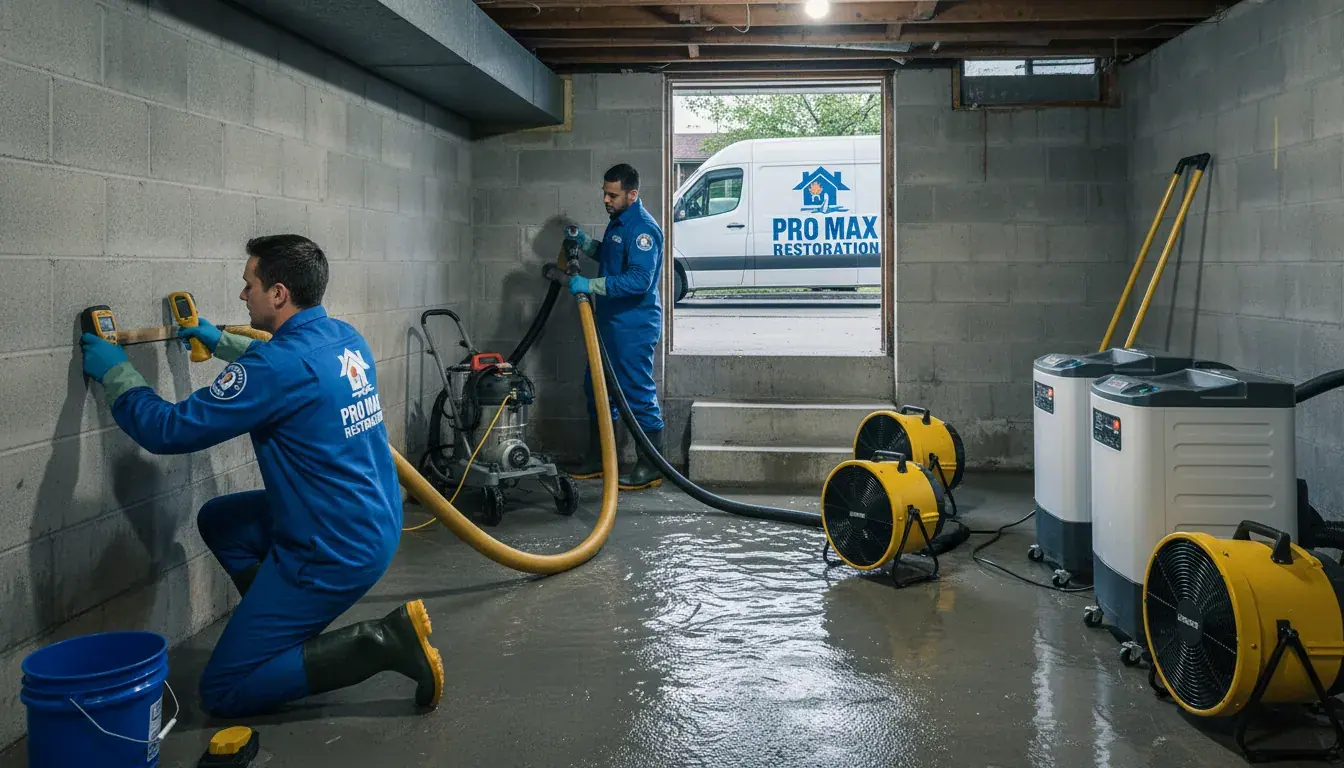
When a pipe leaks in a Toronto condominium, responsibility is split between the corporation's insurance, the standard unit by-law and your own unit policy. This guide explains who pays for what, how deductible chargebacks work under the Condominium Act, and what to do in the first hour.
Few situations create as much confusion as water damage in a condominium. Within hours of a leak, three or four different insurance policies may be involved, along with the corporation, a property manager, at least two owners and possibly a tenant. The short answer to who pays is that it depends on what was damaged, what caused it, and what your building's standard unit by-law says. Here is how that actually works in Ontario.
The quick answer
In most Ontario condominiums, responsibility breaks down roughly like this:
- The corporation's insurance covers the common elements and the standard unit — the baseline finishes the building was originally built or defined to include.
- Your unit owner policy covers your contents, your improvements and betterments above that standard unit, your liability, additional living expenses, and the corporation's deductible if it is charged back to you.
- A tenant's policy covers the tenant's own contents and liability, and never the structure.
The practical consequence is that two owners with identical flooded kitchens can face very different bills, purely because one building's standard unit by-law is more generous than the other's, or because one loss originated inside a unit and the other inside a common-element riser.
What the standard unit by-law actually does
The standard unit by-law is the single most important document in a condominium water claim, and most owners have never read it. It defines, in writing, what counts as part of the unit for insurance purposes. A building whose by-law defines the standard unit as including builder-grade flooring, cabinetry and fixtures puts far more of a loss onto the corporation's policy. A building whose by-law defines the standard unit as the bare concrete, drywall and subfloor puts almost everything onto the owner.
If you upgraded the flooring, replaced the kitchen, added built-ins or installed a new bathroom, those are improvements and betterments. They sit above the standard unit and are your responsibility to insure, no matter who caused the leak. This is the most common source of shock in a condominium claim: the corporation's policy restores the unit to the standard unit definition, and the difference between that and what you actually installed comes out of your own policy, or your own pocket if you do not carry enough coverage.
Deductible chargebacks under the Condominium Act
Corporations in Ontario often carry large deductibles, and it is not unusual to see $25,000, $50,000 or more on a water damage deductible in a Toronto high-rise. Under section 105 of the Condominium Act, 1998, where damage to a unit is caused by an act or omission of an owner, or of their tenants, guests or others they are responsible for, the corporation may charge its deductible back to that owner, subject to the Act and the corporation's by-laws. Many corporations have passed by-laws that extend this further.
This is why the deductible chargeback section of a unit owner policy matters so much. If your washing machine hose fails and water damages four units below, you may be facing the corporation's full deductible personally. Most Ontario insurers offer condominium unit owner coverage that includes a loss assessment or deductible chargeback limit, and reviewing that limit against your corporation's actual deductible is one of the most valuable ten minutes an owner can spend.
Common scenarios and who usually pays
| Cause of the water | Usually responsible |
|---|---|
| Common-element riser, stack or main pipe failure | Corporation's policy (standard unit restored); owner's policy for improvements and contents |
| In-suite water heater or supply line failure | Often the owner, and the corporation's deductible may be charged back |
| Failed washing machine or dishwasher hose in your unit | Owner, including damage to units below |
| Cracked or improperly sealed shower pan in your unit | Owner, and frequently disputed where the failure is gradual |
| Fire sprinkler head discharge (accidental impact) | Usually whoever caused the impact; otherwise the corporation |
| Blocked balcony or terrace drain | Depends on the declaration; often corporation for common element, owner if exclusive-use maintenance applies |
| Window or curtain wall leak | Typically the corporation, as part of the building envelope |
| Neighbour's leak damaging your unit | Your own policy for your improvements and contents; the corporation's policy for the standard unit |
This table describes the common pattern in Ontario condominiums. Your building's declaration, by-laws and standard unit by-law govern, and they do vary. This article is general information, not legal or insurance advice.
What to do in the first hour
Responsibility is decided later. What happens in the first hour decides how large the loss becomes, and in a tower it can escalate across several floors very quickly.
- Stop the source if you safely can. Shut the in-suite isolation valve under the sink, behind the toilet or at the water heater. If you cannot find it, call the concierge or property manager immediately, because the building shut-off is theirs to operate.
- Kill power to wet areas at the panel if water is near outlets, light fixtures or electrical equipment.
- Notify the property manager or concierge immediately, even at night. They need to check the units below and the common areas, and most declarations require prompt notice.
- Photograph and video everything before you move anything, including standing water, affected finishes, and the source of the leak if visible.
- Call a restoration contractor. Extraction within the first 24 to 48 hours is what keeps clean water from degrading into a contaminated loss and keeps flooring and drywall in the clean-and-dry column rather than the demolition column.
- Notify your own insurer as well as the corporation. Both files may be needed, and Ontario policies generally require prompt notice.
What not to do: do not wait for the corporation to decide whose problem it is before mitigation begins. Ontario policies require owners to take reasonable steps to prevent further damage, and a delay of two days while responsibility is debated can convert a dryable loss into a full strip-out. Our condo water damage restoration team mobilises 24/7 and coordinates directly with property managers and boards.
Why documentation decides the outcome
Condominium water claims are settled on paper. When water travels down a stack through six units, the question of which portion of the damage belongs to which policy is answered by whatever record exists, and if no one created that record properly, the owner with the least documentation tends to absorb the most cost. That is why our condominium work produces a separate file for each affected unit: photographs before anything is touched, a moisture map showing the actual wet footprint, a daily log of calibrated readings until the assembly meets the IICRC S-500 dry standard, and an itemised scope. The corporation's insurer, each owner's insurer and the property manager all get a defensible record of exactly what was damaged where.
It also matters because condominium losses are hidden losses. Water travelling down a stack runs inside wall assemblies, under flooring and above ceilings, so the visible damage in any given unit is a fraction of the wet material. We use FLIR thermal imaging and calibrated moisture meters to find the real extent before opening anything, which both limits unnecessary demolition and prevents the far more expensive scenario in which a wall cavity is closed up wet and produces mold two months later.
How to protect yourself before it happens
- Read your standard unit by-law. Ask the property manager for it, or check your status certificate package. It tells you exactly where the corporation's responsibility ends and yours begins.
- Check your deductible chargeback and loss assessment limits against the corporation's actual water damage deductible. If the corporation carries $50,000 and your policy covers $10,000, that gap is yours.
- Insure your improvements and betterments at replacement value. If you renovated, the standard unit definition will not put your kitchen back.
- Replace braided supply hoses on washing machines and dishwashers every five to seven years, and replace in-suite water heaters before they reach end of life. These are the two most common owner-caused losses in Toronto towers.
- Know where your in-suite shut-offs are before you need them, and confirm they actually turn.
We work with owners, boards and property managers
Pro Max Restoration responds to condominium water losses across Toronto and the GTA 24/7, with an average arrival of about 45 minutes. We contain and extract quickly across every affected unit and common area, dry to the IICRC S-500 standard with documented daily readings, remediate mold under S-520 where growth has begun, and rebuild in-house afterwards. We are regularly called into towers in Yorkville, Liberty Village and Port Credit, and we bill all major Canadian insurers directly. For background on what Ontario policies cover generally, see our guide to home insurance and water damage in Ontario.
Water in your unit right now? Call 416-988-3539 at any hour, or request a free assessment. This article is general information only and is not legal or insurance advice; your corporation's declaration and by-laws and your own policy wording govern.
Frequently Asked Questions
Who pays for water damage in a Toronto condo?
What is a standard unit by-law and why does it matter?
Can my condo corporation charge me its insurance deductible?
My neighbour's leak damaged my unit. Whose insurance pays?
Should I wait for the condo board to approve restoration before starting?
Do I need condo insurance if the building already has insurance?
Need Professional Restoration Help?
Our IICRC-certified team is available 24/7 for emergencies and free consultations.
Call 416-988-3539