
Mold Removal in Brampton
From Bramalea back-splits to basement apartments in Springdale and Mount Pleasant, our IICRC S-520 technicians find the moisture, contain the mold and verify the air in Brampton homes, 24/7.
Last updated:
Trusted Mold Removal in Brampton
Brampton has grown faster than almost any city in Ontario over the past three decades, and its housing tells that story. Bramalea, often described as Canada's first satellite city, is full of 1960s and 1970s bungalows, back-splits and townhouse blocks that now have original windows, tired bathroom fans and basements finished long before modern moisture-control practice. North of Bovaird Drive, Springdale, Sandalwood, Fletcher's Meadow, Mount Pleasant and Castlemore filled in with thousands of 1990s to 2010s detached and semi-detached homes built on heavy Peel Plain clay. Each era gives mold a foothold in a different way, which is why every request for mold removal in Brampton starts with understanding what kind of house we are standing in, not with a spray bottle and a guess.
The second big factor is the basement itself. Brampton is widely known for its basement apartments and second units, and a lower level that houses a family produces far more moisture than a rec room ever did: daily showers, cooking without a range hood vented outdoors, laundry drying on racks and bedrooms with small egress windows that rarely open in winter. Put that against a foundation sitting in wet clay for much of the spring, and basement mold removal in Brampton becomes one of the most common calls we take in Peel. Growth tends to appear behind furniture pushed against exterior walls, under carpet laid straight onto the slab, inside below-grade bedroom closets and around the laundry area, often weeks before anyone upstairs notices a smell.
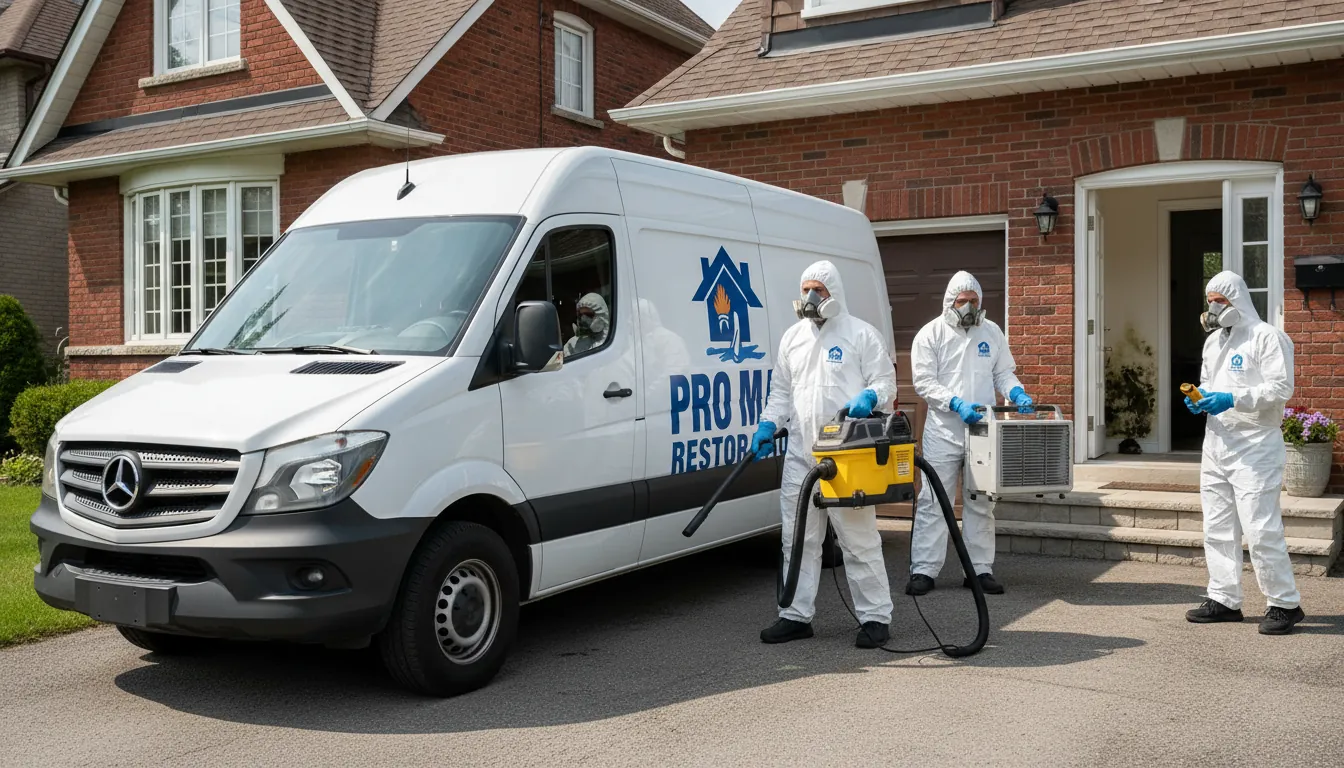
Pro Max Restoration performs mold remediation in Brampton to the IICRC S-520 standard, whether the growth is a patch behind a bathroom vanity or an entire basement suite. A mold inspection comes first, using calibrated moisture meters and thermal imaging to locate the water feeding the growth, with air or surface sampling where the result will change the plan. HEPA-filtered containment under negative air pressure goes up before anything is cut out, and black mold removal in Brampton follows the same discipline with stricter protective equipment. Our crews are on call around the clock, typically reach urgent Brampton calls in about 45 minutes, and bill insurers directly when the mold stems from a covered water loss.
- IICRC S-520 mold remediation for Brampton detached homes, townhouses and basement second units
- Moisture mapping with thermal imaging and calibrated meters before any drywall is removed
- HEPA containment under negative air, set up so the rest of an occupied house stays in use
- Post-remediation clearance testing with written results you can share with tenants, buyers or insurers
- Direct billing to Intact, Aviva, Desjardins, TD and other insurers when mold follows a covered water loss
- Crews on call 24/7 with a typical 45-minute response to urgent Brampton calls
Common Causes of Mold Growth in Brampton
After 600+ GTA restoration projects, we know exactly how Brampton homes are affected — and how to fix it for good.
Second-Unit Humidity Load
A basement apartment with its own kitchen, bathroom and laundry can add litres of water vapour to the air every day. When bathroom fans are undersized, range hoods recirculate instead of venting outside and windows stay shut all winter, the moisture condenses on the coldest surfaces, usually the exterior walls and closet corners of below-grade bedrooms.
Clay Soil and Spring Seepage
Much of Brampton sits on dense clay till that drains slowly. Through the spring thaw and long autumn rains the soil stays saturated against the foundation, and moisture wicks through form-tie holes, hairline cracks and the slab edge into framed walls, where it gets trapped behind insulation and plastic vapour barrier.
Cold Rooms Under the Front Porch
Many 1990s to 2010s Brampton homes have a cold cellar beneath the concrete porch slab. When the porch membrane fails or the wall and door between the cold room and the finished basement are poorly insulated, condensation forms on the warm side and mold spreads across the door, shelving and adjacent framing.
Tract-Home Attic Ventilation
In fast-built subdivisions we regularly find bathroom fans ducted into the attic rather than outdoors, disconnected flex duct, and soffit vents buried under blown-in insulation. Warm, moist air then frosts on the underside of the roof sheathing in January and melts in the thaw, leaving the dark staining that signals attic mold.
Etobicoke Creek Flood Legacy
Downtown Brampton and parts of Peel Village lie along the Etobicoke Creek corridor, and the downtown flood plain is the reason the city has pursued flood-protection planning through its Riverwalk initiative. Basements that took on water in past storms and were only mopped and fanned dry are a frequent source of hidden growth.
Mold almost always traces back to a moisture source — a leaking basement, a past water damage event, or poor ventilation. We fix the source and verify the air — request a free quote.
Basement Mold Removal in Brampton: Where It Starts and How We Stop It
Most basement mold in Brampton begins outside the wall. Many homes built from the 1990s onward have poured concrete foundations with a sprayed or rolled damp-proofing coat rather than a full waterproofing membrane, and that coating is designed to slow moisture, not stop water under pressure. In heavy clay, weeping tile can gradually clog with fine silt, and once drainage slows, the soil around the foundation stays wet for weeks after a storm or the spring melt. Water then finds form-tie holes, cold joints and small shrinkage cracks. On the inside you may see nothing more than a faint tide line on the concrete, but behind a finished wall that slow wetting keeps the bottom plate, the insulation and the back face of the drywall damp for months at a time, exactly the conditions mold needs.
How the basement was finished matters just as much. The common approach of framing a stud wall tight to the concrete, filling it with fibreglass batts and covering it with plastic sheet before drywall can create a moisture sandwich: water vapour moving in from the foundation is trapped against the cold side of the poly and condenses there. Wood bottom plates laid directly on the slab without a gasket wick moisture upward, and carpet or underlay installed straight on concrete stays damp at its base. When we open these walls in Brampton basements, the drywall face often looks clean while the back paper, studs and batts are heavily colonised. That is why our inspections rely on moisture readings and thermal imaging rather than what is visible from the room.
Basement second units add their own layer. The ceiling and wall assemblies that separate a basement apartment from the main dwelling are part of the fire separation the Ontario Building Code and Fire Code require for two-unit houses, so when moldy drywall is removed from those assemblies, it has to be rebuilt to the same standard, not simply patched. Shared furnaces and ductwork can also carry spores between units if containment is not planned carefully. We seal return-air grilles in the work zone, isolate the area under negative pressure with HEPA filtration, and schedule the loudest, messiest work with landlords so that tenants and the family upstairs can keep using the rest of the house wherever that is safe.
Attic mold in Brampton follows a predictable pattern. Across Springdale, Sandalwood and Castlemore we see hip roofs with limited ridge venting, recessed pot lights that leak warm air into the attic, and insulation top-ups that buried the baffles meant to keep soffit vents open. When outdoor temperatures drop well below freezing, moisture from the house frosts on nail tips and sheathing; a mild day melts it, and the wood gets soaked repeatedly through the season. Depending on how far the growth has gone, affected sheathing is cleaned and HEPA-vacuumed, treated and sealed, or replaced where it has lost strength. We pair that with correcting exhaust ducting, air sealing obvious leaks and reopening ventilation paths so the attic can dry itself.
The job is not finished when the mold is gone; it is finished when the cause is fixed and the result is verified. On Brampton projects that can mean coordinating exterior drainage or waterproofing work, re-routing a bathroom fan, adding dehumidification to a basement suite or adjusting how a cold room is insulated from the living space. After removal and cleaning, post-remediation clearance testing confirms the area is back to normal conditions before rebuilding starts, and you receive written documentation you can keep for insurers, tenants or a future sale. With more than 15 years in restoration and over 600 GTA projects behind us, our team knows what Peel housing hides behind the drywall and plans each remediation around it.
Keeping a Brampton Basement Apartment Mold-Free
The simplest tool in any basement suite is an inexpensive hygrometer. Health Canada suggests keeping indoor relative humidity roughly between 30 and 50 per cent, and basement units in Brampton often sit well above that in summer and after showers or cooking. A dehumidifier sized for the space, emptied or drained to a floor drain, makes a measurable difference, and running it through the humid months from late spring to early fall keeps the slab and exterior walls from staying damp.
Ventilation is the next line of defence. Bathroom fans should vent outdoors, not into a ceiling cavity, and should run for 20 to 30 minutes after every shower. Range hoods that only recirculate do little for moisture. Clothes dryers need a rigid or semi-rigid duct to the outside with a clean lint trap, and drying racks full of laundry in a bedroom add a surprising amount of water to the air. Keep beds, dressers and storage boxes a few centimetres away from exterior walls so air can move behind them.
Landlords should walk the exterior each spring. Downspouts that discharge beside the foundation, grading that slopes toward the house and window wells full of leaves are among the most common reasons Brampton basements stay wet. Extending downspouts well away from the wall, re-grading so soil falls away from the foundation and fitting window-well covers are low-cost fixes. If the home has a sump pit, test the pump before the spring thaw and consider a battery backup.
Finally, act on early signs. A musty smell in a closet, a dark line along the baseboard or a patch of peeling paint on an exterior wall is far cheaper to deal with in week one than in month six. Tenants should report leaks and odours in writing as soon as they notice them, and landlords should respond promptly, because small moisture problems in a basement unit grow into large remediation projects when they are left behind finished walls.
Signs You Need Mold Removal in Brampton
Mold often grows out of sight, behind drywall and under flooring, long before you see it. If you notice any of the following in your Brampton home, book a professional mold inspection before the problem spreads further.
- A persistent musty or earthy smell that never fully goes away
- Visible black, green or white spotting on walls, ceilings or grout
- Peeling paint, bubbling wallpaper or discoloured drywall
- Condensation on windows and consistently high indoor humidity
- Worsening allergy, asthma or respiratory symptoms that ease when you leave the house
- Any previous flood, leak or water damage that was not professionally dried
Emergency Mold Help in Brampton
Our IICRC-certified crews are on call 24 hours a day, 365 days a year and reach Brampton in about 45 minutes with the equipment to stop the damage immediately.
Our Mold Removal Process in Brampton
Every Brampton mold remediation follows the IICRC S-520 standard, from testing and containment through clearance verification, so the mold is removed safely and does not come back.
Inspection & Mold Testing
We inspect the affected areas of your Brampton property and carry out air-quality and surface sampling to confirm the mold species, including black mold (Stachybotrys chartarum), and establish exactly how far the growth has spread before any work begins.
Finding the Moisture Source
Mold is always a moisture problem first. Using thermal imaging and moisture meters we trace the water behind the growth, whether that is a foundation leak, a past flood, plumbing seepage or condensation from poor ventilation.
HEPA Containment & Negative Air
We seal the work area and run HEPA-filtered negative air pressure so spores cannot spread into clean parts of your Brampton home during removal. This step is never optional; disturbing mold without containment makes the problem significantly worse.
IICRC S-520 Mold Remediation
Affected porous materials are removed and bagged for safe disposal, and salvageable surfaces are HEPA-vacuumed and cleaned to the IICRC S-520 standard, the recognised benchmark for professional mold remediation in North America.
Antimicrobial Treatment & Drying
We apply antimicrobial treatments to treated surfaces and dry the area thoroughly with commercial dehumidification, because residual moisture is the single reason remediated mold ever returns.
Clearance Testing & Rebuild
Post-remediation verification testing confirms the air in your Brampton home is safe before we rebuild. You receive documented clearance results, and our team restores any drywall, insulation and finishes that had to be removed.
Why Brampton Property Owners Choose Pro Max for Mold Removal
15+ years, 600+ restored GTA properties and a perfect 5-star Google rating, backed by the certifications and insurance relationships that matter when it is your home on the line.
IICRC-Certified Technicians
Every Brampton job is led by technicians certified to the IICRC S-500 water damage and S-520 mold remediation standards, the benchmarks Canadian insurers recognise and expect.
45-Minute Emergency Response
We answer the phone 24 hours a day, 365 days a year and reach Brampton properties in about 45 minutes, because the first 24 to 48 hours decide whether materials are dried and saved or demolished and replaced.
Direct Insurance Billing
We document every loss with photographs and moisture readings and bill Intact, Aviva, Desjardins, TD Insurance, Wawanesa, Co-operators and all other major Canadian carriers directly, so covered work costs you nothing beyond your deductible.
One Company, Start to Finish
Emergency extraction, structural drying, mold prevention and the complete rebuild are all handled in-house. One company, one warranty and no coordinating three different contractors while your Brampton home sits damaged.
15+ Years and 600+ Properties
We have restored more than 600 properties across the Greater Toronto Area since 2009 and hold a perfect 5.0 Google rating, so you are trusting your Brampton home to a team that has genuinely seen it all.
Written Estimates, No Surprises
You receive a clear, itemised written estimate before work begins, and we review the scope directly with your adjuster so there are no disputed line items or unexpected costs at the end of the project.
Mold Removal Service Areas Across Brampton
We provide fast, mold removal in every Brampton neighbourhood, including:
Recent Mold Removal Projects in Brampton
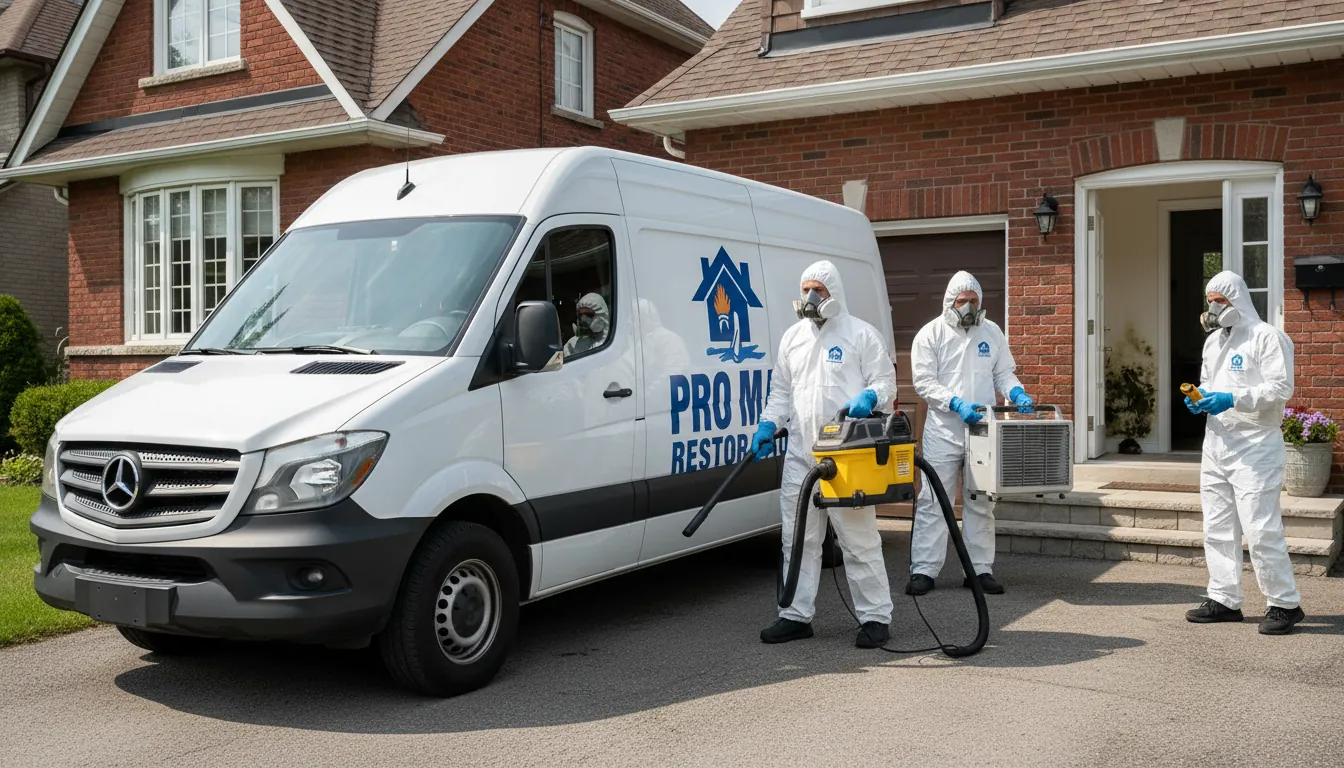
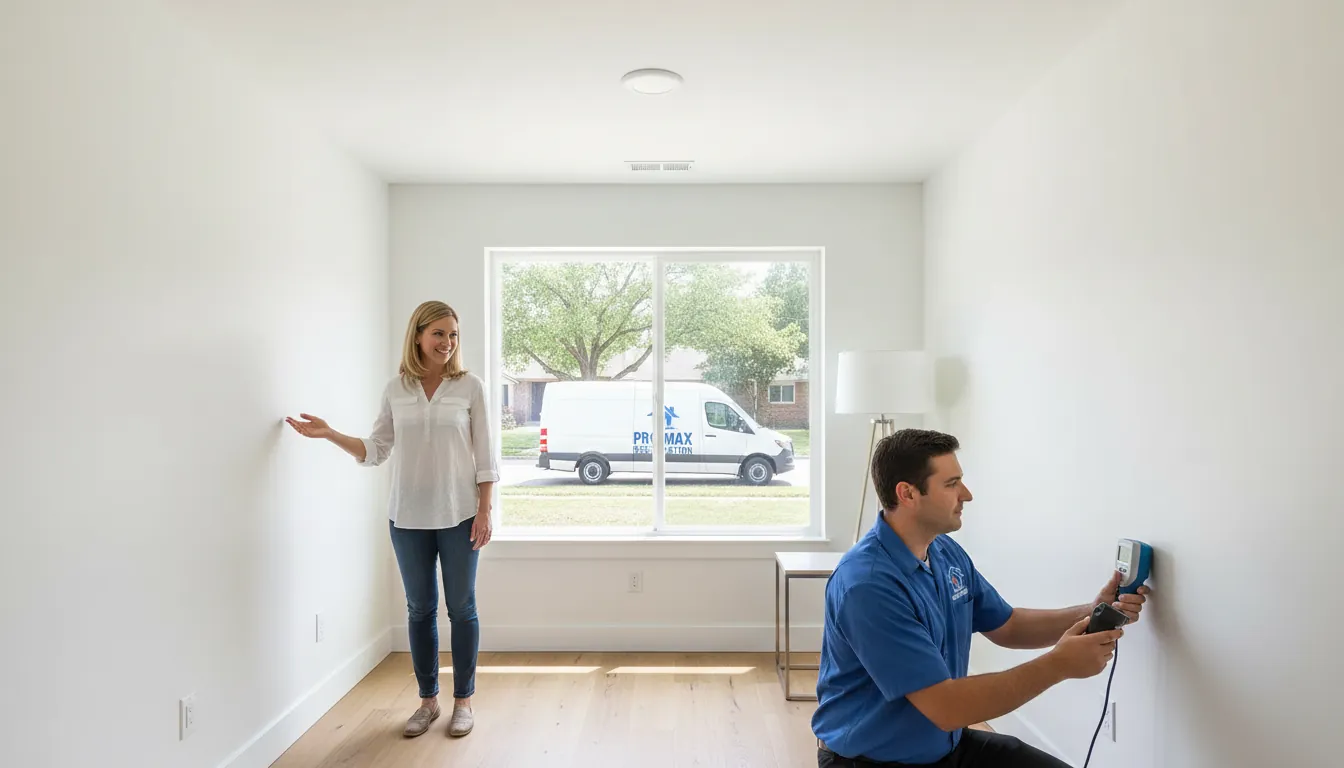
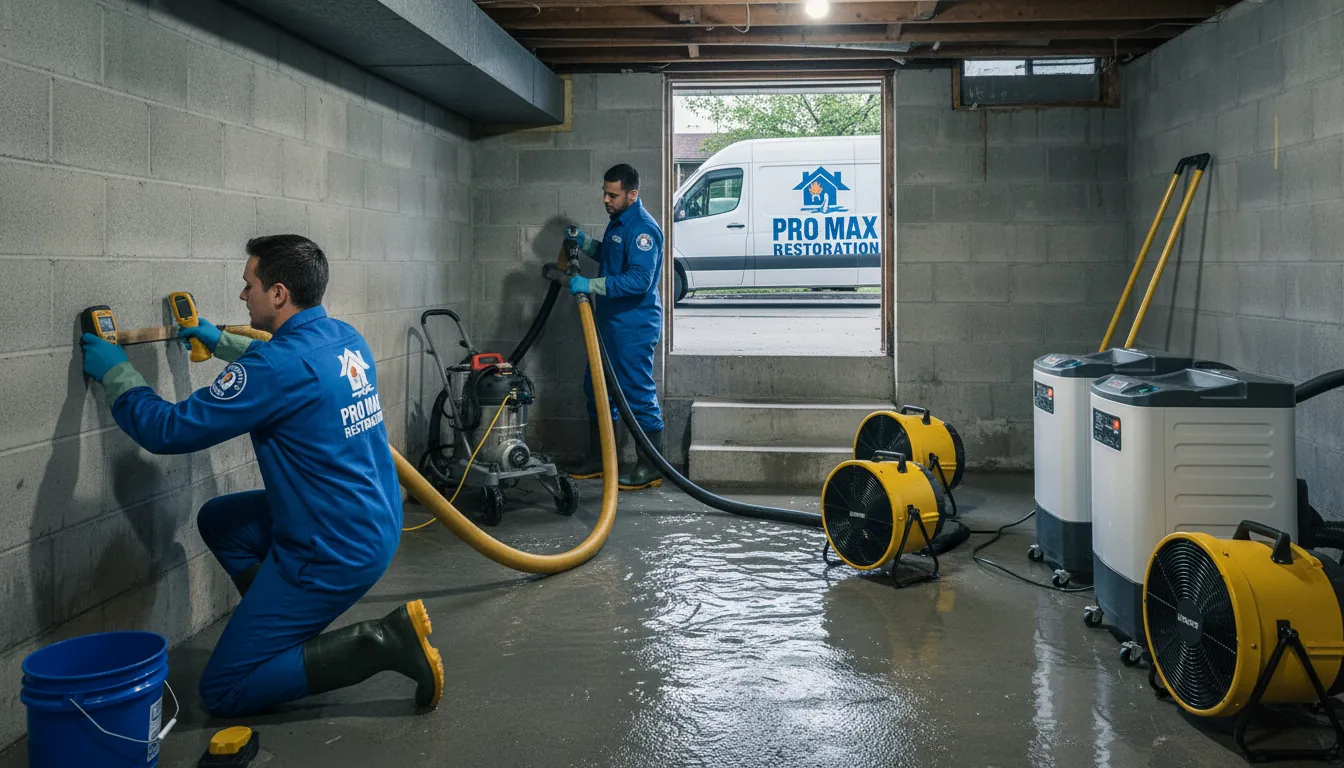
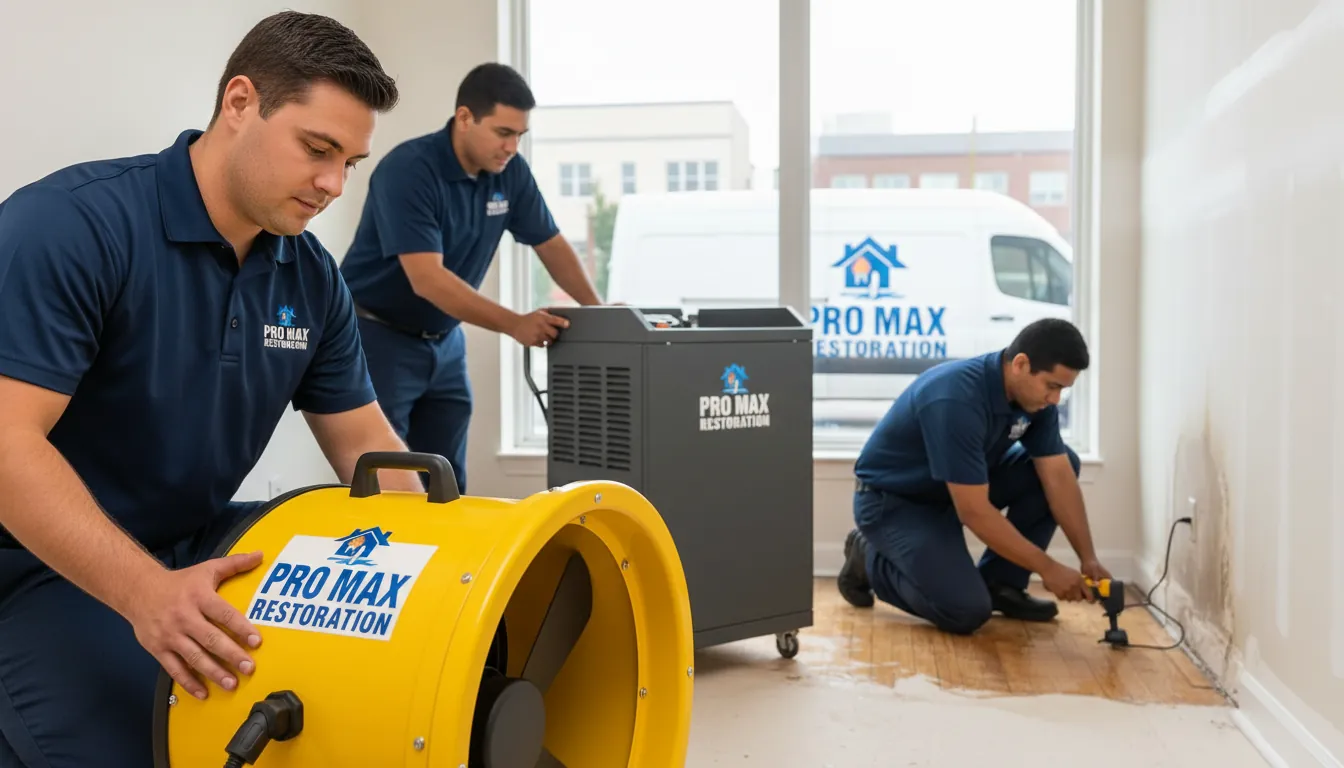
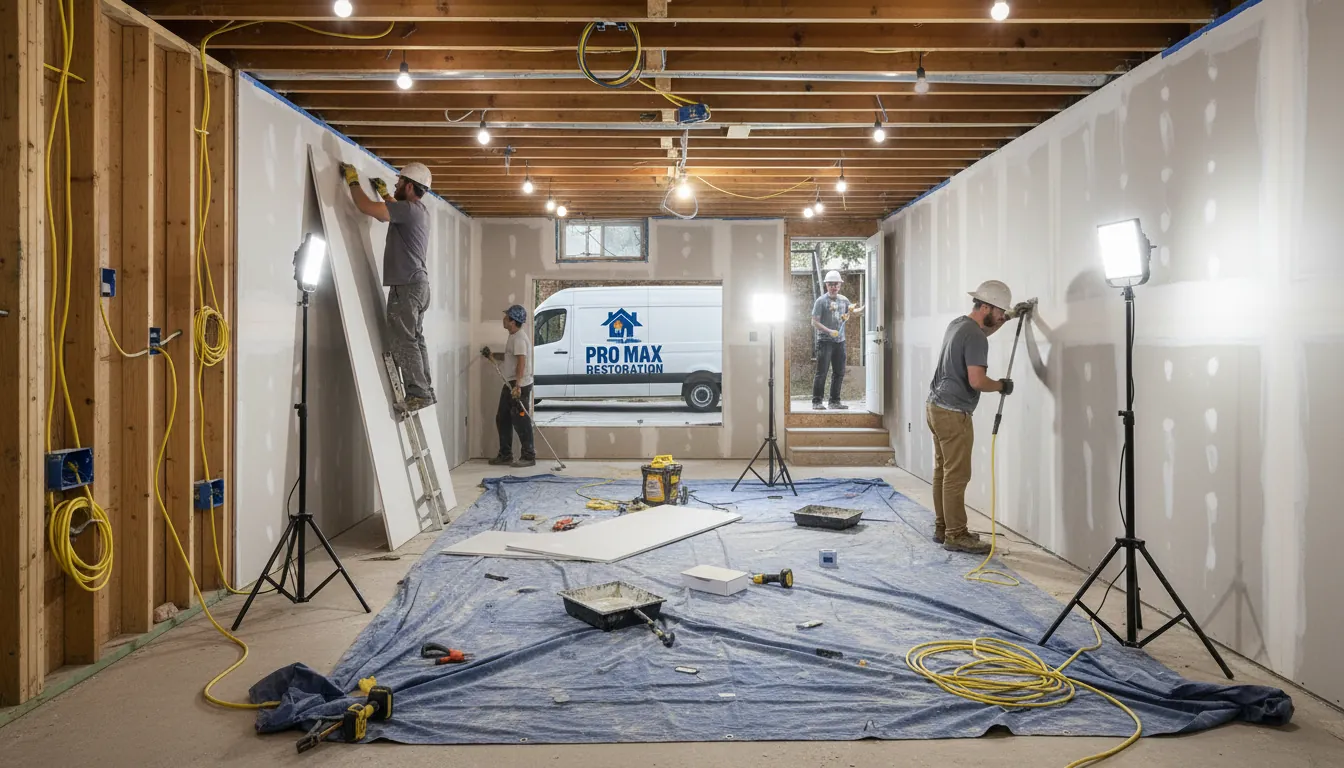
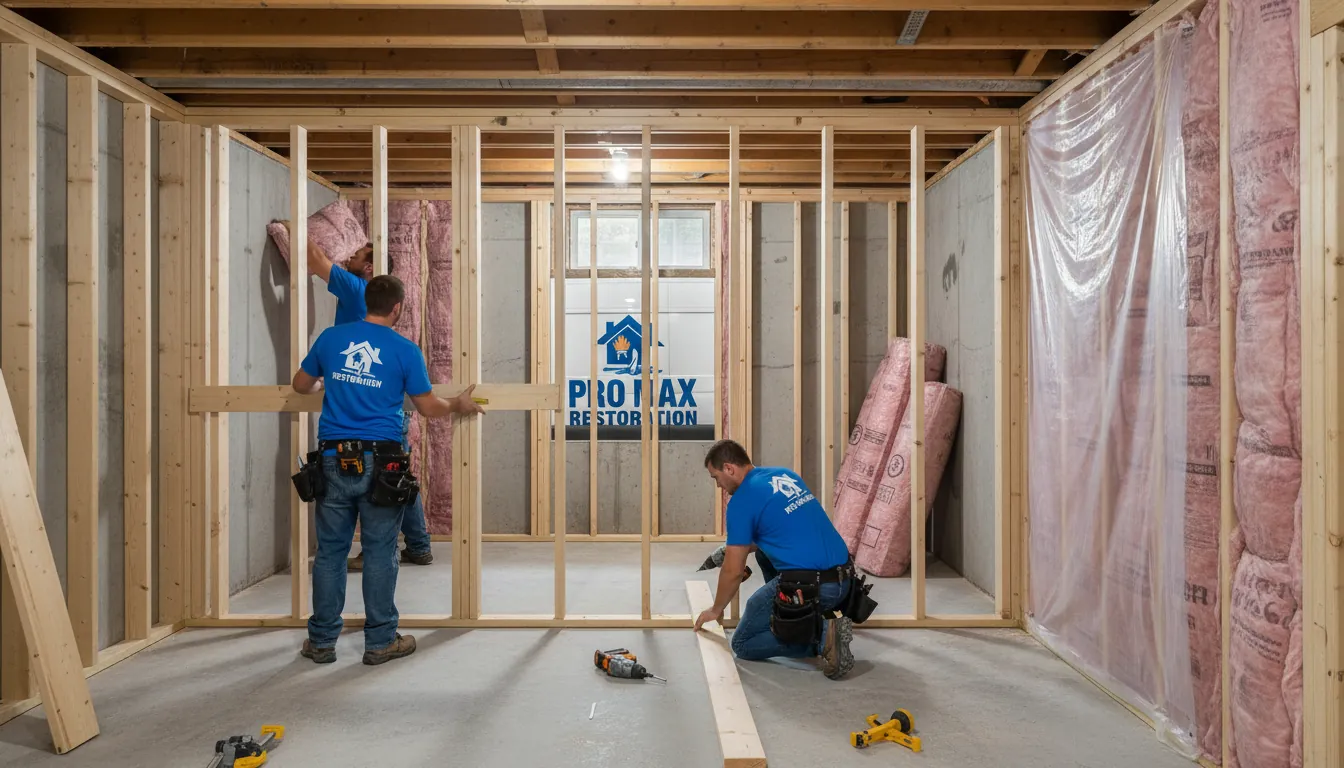
A look at real mold removal work completed by our IICRC-certified crews for homeowners in Brampton and across the Greater Toronto Area.
Complete Restoration Services in Brampton
One company for every emergency — from the first 45-minute response through complete rebuild.
When Brampton Properties Are Most at Risk
Water damage in the Greater Toronto Area is seasonal, and knowing which risk belongs to which month is the cheapest prevention there is. Here is the pattern we see across Bramptonyear after year.
Winter
December – MarchFrozen and burst pipes
When temperatures fall below about -20C, water inside uninsulated supply lines freezes and expands, generating pressure that splits copper and PEX. Pipes in exterior walls, unheated garages and crawl spaces fail first, and the leak often runs for hours before anyone notices. This is our single busiest emergency window across Brampton.
Spring
March – MaySnowmelt and saturated ground
Rapid thaw combined with spring rain saturates the ground while it is still partly frozen, so water has nowhere to go but against foundations. Sump pumps run continuously, weeping tile that is cracked or clogged backs up, and any foundation crack in a Brampton home shows itself now.
Summer
June – SeptemberStorm surcharge and sewer backup
Short, intense thunderstorms overwhelm storm and combined sewers faster than they can drain. This is when sewer backups and overland flooding happen, and it is the season when a missing backwater valve costs Brampton homeowners the most.
Autumn
October – NovemberBlocked drainage and appliance failure
Leaves block eavestroughs, downspouts and window wells, sending roof water straight down the foundation. It is also when hot water tanks nearing the end of a 10 to 12 year life tend to let go, and when outdoor hose bibs left connected cause the first freeze-up.
The Standards We Work To
Our content is written and reviewed by the Pro Max Restoration technical team, the same IICRC-certified technicians who carry out water damage restoration, mold remediation and fire damage recovery across Toronto and the GTA every day. Guidance on this site reflects the IICRC S-500 and S-520 standards and what we see on real GTA properties, not generic advice.
IICRC S-500 Certified
The ANSI-approved Standard for Professional Water Damage Restoration. It governs how water losses are categorised, how structures are dried and how "dry" is verified with moisture readings rather than guesswork.
IICRC S-520 Certified
The ANSI-approved Standard for Professional Mold Remediation. It governs containment, negative air pressure, HEPA filtration, safe removal of affected materials and post-remediation verification.
Ontario O. Reg. 278/05 Compliant
Asbestos abatement is carried out to Ontario Ministry of Labour regulation O. Reg. 278/05, covering Type 1, 2 and 3 operations, air monitoring and disposal at licensed facilities.
Licensed & Fully Insured
We are a licensed and insured Ontario restoration contractor, and we carry the coverage required to work in occupied homes, condominiums and commercial properties.
Direct Insurance Billing
We bill Intact, Aviva, Desjardins, TD Insurance, Wawanesa, Co-operators and other major Canadian carriers directly, and we document every loss to the standard adjusters expect.
Calibrated Measurement, Not Guesswork
Every job uses FLIR thermal imaging and calibrated moisture meters, with daily readings logged until materials reach the IICRC dry standard. You receive that documentation.
How this guidance is written, measured and corrected: our editorial standards.
Mold Removal in Brampton — Your Questions Answered
How much does mold removal cost in Brampton?
Can I clean basement mold in Brampton myself?
I rent a basement apartment in Brampton and my landlord will not fix the mold. What can I do?
Do tenants need to move out while you remediate a basement unit?
Does home insurance cover mold removal in Brampton?
Why does my newer Brampton home have attic mold?
Should I get a mold inspection before buying a Brampton home with a basement apartment?
Need Mold Removal in Brampton?
Call 416-988-3539 — IICRC-certified crews serving Brampton 24/7.