
Mold Inspection & Testing in Toronto
Smell something musty but cannot see anything? Our IICRC S-520 certified technicians find the moisture behind mold with thermal imaging and calibrated meters, take air or surface samples when they will actually answer a question, and send them to an accredited third-party laboratory.
Last updated:
Trusted Mold Inspection & Testing in Toronto
A good mold inspection is a moisture investigation first and a sampling exercise second. Mold needs water to grow, so the real questions are where the moisture is coming from, how far it has spread and what materials it has affected. People usually search for mold inspection or mold testing in Toronto after a musty smell that will not go away, a leak or flood that may not have been dried properly, discolouration on a basement wall or closet ceiling, or before buying an older house. In each case, the inspection should end with a clear answer: is there a moisture problem, is there mold growth, how big is it and what should happen next. Sampling is one of the tools that helps answer that, not the product in itself.
Toronto housing gives mold plenty of opportunities. Semis and row houses in Leslieville, the Annex and Riverdale often sit on rubble stone or early block foundations with no exterior waterproofing, and finished basements installed decades later can trap moisture behind drywall. Post-war bungalows in East York and Scarborough commonly have attics where warm, moist air escapes through pot lights and bathroom fans that were never ducted outside, leading to dark staining on roof sheathing in winter. Condos across the city see condensation on window frames, closets on exterior walls and fan coil drain pans that overflow slowly. Each of these calls for a different inspection route, which is why we start by asking about the building and its history.
We are upfront about how we work. We use calibrated moisture meters, FLIR thermal imaging and hygrometers on every inspection, and when sampling is justified we collect air, tape-lift, swab or bulk samples and send them to an accredited third-party laboratory for analysis. We do not run our own lab. We will also tell you when testing is not worth paying for, for example when growth is plainly visible and the moisture source is obvious. If remediation is needed, our team works to the IICRC S-520 standard, and if you prefer an independent assessor for testing or clearance, we are happy to work alongside one. Our 15+ years and 600+ GTA projects inform that advice, and you receive a written summary with photos, readings and recommendations whether or not any work follows.
- Every inspection includes calibrated moisture mapping and FLIR thermal imaging.
- Air, tape-lift, swab or bulk sampling chosen to answer a specific question, not by default.
- Samples analysed by an accredited third-party laboratory; we do not run an in-house lab.
- Plain-language explanation of results, including how indoor samples compare with outdoor.
- IICRC S-520 remediation and post-remediation verification if removal is needed.
- Happy to work alongside an independent assessor, home inspector or your insurer.
Common Causes of Mold Growth in Toronto
After 600+ GTA restoration projects, we know exactly how Toronto homes are affected — and how to fix it for good.
Basement Moisture in Older Foundations
Rubble stone and early block foundations in older Toronto neighbourhoods let groundwater and humidity through the wall. When a basement is finished with drywall and carpet over that foundation, moisture condenses behind the finishes where nobody can see it. White mineral deposits, peeling paint and a musty smell in a finished basement are common first clues.
Attic Condensation and Poor Ventilation
Warm, humid indoor air leaking into the attic through unsealed pot lights, attic hatches and bathroom fans vented into the attic space condenses on cold roof sheathing in winter. The result is dark staining, often on the north-facing slope, and sometimes frost or dripping nails. It is a ventilation and air-sealing issue as much as a mold issue.
Hidden Plumbing Leaks
Slow leaks from shower valves, toilet seals, dishwasher lines and kitchen drains can run for months inside a wall or under a floor. The first sign is often a smell or slight softness rather than visible growth. Thermal imaging and moisture meters locate these without opening walls blindly.
Condo Condensation and Fan Coil Pans
Toronto condos are tight, and in winter, cooking, showers and drying laundry push indoor humidity up. Moisture condenses on window frames and on closet walls that face the exterior, while clogged fan coil drain pans leak slowly behind bulkheads. Growth tends to appear on caulking, drywall corners and the backs of stored items.
Past Water Damage That Was Never Fully Dried
A previous flood, leak or sewer backup that was dried only until surfaces felt dry can leave moisture in bottom plates, insulation and the back of drywall. Mold can then develop weeks or months later. Inspections after a past loss check those hidden areas with meters rather than relying on appearance.
Mold almost always traces back to a moisture source — a leaking basement, a past water damage event, or poor ventilation. We fix the source and verify the air — request a free quote.
How a Professional Mold Inspection in Toronto Actually Works
Every inspection starts with a conversation and a walk-through. We ask when the smell or staining started, whether it changes with the seasons or the weather, whether there has been a leak, flood or renovation, and whether anyone in the home has concerns we should be aware of. Then we look methodically: basement walls and floors, the underside of stairs, cold rooms, the area around the furnace and water heater, under sinks and behind toilets, window frames, closets on exterior walls, and the attic where it can be accessed safely. Visual clues include staining, efflorescence, peeling or bubbling paint, warped trim, water lines on drywall and corrosion on fasteners. The history often explains more than any single reading.
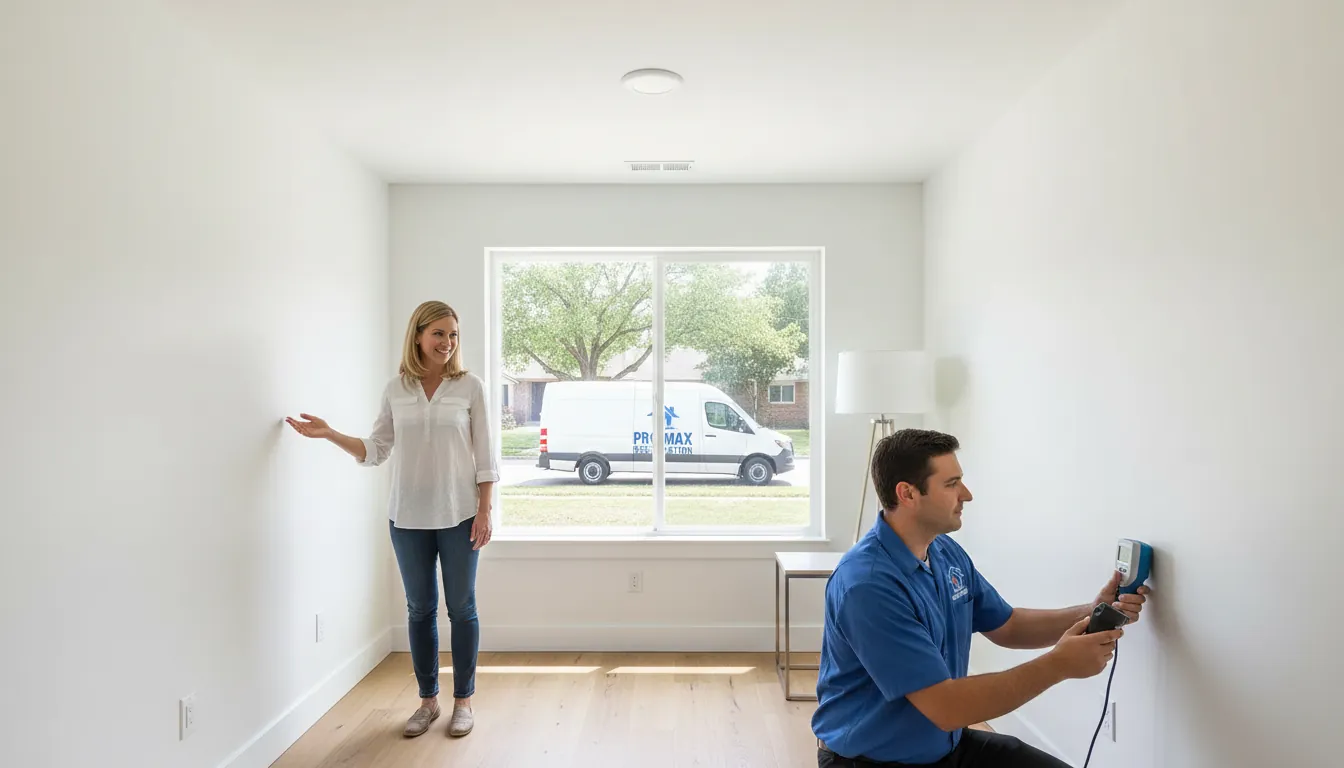
Moisture mapping is where a professional inspection earns its cost. Pinless meters scan large areas of drywall and flooring quickly, pin meters measure moisture content in wood and at specific points, and readings are compared with similar materials in unaffected rooms, because a number on its own means little. FLIR thermal imaging shows temperature differences, not moisture directly, but damp materials usually read cooler, so the camera points us to areas worth confirming with a meter. A hygrometer records relative humidity and temperature so we can judge condensation risk. Most building-science guidance aims for roughly 30 to 50 per cent indoor humidity, lower in the coldest weeks to limit condensation on windows and exterior walls. Readings that stay high near a foundation wall, under a window or around a plumbing fixture tell us where to look next, and where sampling would actually be useful.
Sampling is chosen to answer a specific question. Air samples are collected with a calibrated pump drawing a known volume of air through a spore trap cassette, always paired with an outdoor control sample taken at the same time for comparison. Where hidden growth inside a wall is suspected, a cavity sample can be taken through a very small hole. Surface samples come in three forms: a tape lift that captures spores and fungal structures from a stain, a swab for textured or uneven surfaces, and a bulk sample where a small piece of material is removed. Each method has limits. Air results are a snapshot that changes with activity, ventilation and outdoor conditions, and a surface sample only describes the spot it came from.
Samples go to an accredited third-party laboratory, commonly one accredited under the AIHA Environmental Microbiology Laboratory Accreditation Program, with a chain-of-custody form. Most residential samples are analysed by direct microscopic examination, which counts and identifies spores and fungal fragments by genus. Culture methods can identify species but take longer and are only needed in specific situations. Reading the report means comparing indoor with outdoor results, looking for types present indoors that are absent or rare outside, and noting indicator genera associated with persistently wet materials. Because there are no Canadian regulatory limits for indoor spore counts, lab numbers are always read alongside the moisture map and what we observed on site. A single elevated result without a matching moisture problem is treated with caution, and a clean result does not override a wet wall.
Testing is not always worth the money, and we say so. Health Canada's guidance for homeowners describes mold covering fewer than three patches, each smaller than about one square metre, as small enough for careful cleanup, while larger or recurring growth calls for a professional. If growth is visible and the moisture source is obvious, sampling rarely changes what needs to be done. Where it does help is in finding hidden growth, supporting a real estate decision, documenting conditions for an insurer or a tenancy dispute, and confirming clearance after remediation. When removal is needed, the inspection report becomes the remediation plan, with containment, removal and drying following the IICRC S-520 standard. Anyone with health concerns should consult a physician.
Mold Inspection for Toronto Home Buyers, Sellers and Tenants
For buyers, timing is everything. Conditional periods in Toronto are often short, so it helps to book a mold inspection at the same time as your general home inspection and to ask the laboratory for rush turnaround if sampling is needed. Focus on the areas that matter in older Toronto homes: the basement and any finished lower level, the attic, bathrooms and the area around the furnace. Ask the seller about past floods or basement water, and remember that a fresh coat of paint on a basement wall is not evidence that a moisture problem has gone away.
For sellers, an inspection before listing can identify moisture issues while there is still time to fix them on your terms rather than negotiating under pressure. If remediation is done, keep the records: the inspection, the scope of work and any clearance results. Whether and how past issues should be disclosed is a question for your real estate professional or lawyer, but documentation almost always makes that conversation easier.
For tenants and landlords, mold is usually a symptom of a leak, condensation or ventilation problem that someone has to fix. Tenants should report concerns to the landlord in writing, and if a property standards issue is not resolved, the City of Toronto can be contacted through 311. An inspection with moisture readings and photographs gives both sides objective information to work from, and we are glad to prepare a report for either party.
Whatever the reason for the inspection, the outcome should be practical: where the moisture is, whether mold is growing, how much, and what it will take to correct. If the answer is that you do not need us, we will tell you that too.
Signs You Need Mold Inspection & Testing in Toronto
Mold often grows out of sight, behind drywall and under flooring, long before you see it. If you notice any of the following in your Toronto home, book a professional mold inspection before the problem spreads further.
- A persistent musty or earthy smell that never fully goes away
- Visible black, green or white spotting on walls, ceilings or grout
- Peeling paint, bubbling wallpaper or discoloured drywall
- Condensation on windows and consistently high indoor humidity
- Worsening allergy, asthma or respiratory symptoms that ease when you leave the house
- Any previous flood, leak or water damage that was not professionally dried
Emergency Mold Inspection Help in Toronto
Our IICRC-certified crews are on call 24 hours a day, 365 days a year and reach Toronto in about 45 minutes with the equipment to stop the damage immediately.
Our Mold Inspection & Testing Process in Toronto
Every Toronto mold remediation follows the IICRC S-520 standard, from testing and containment through clearance verification, so the mold is removed safely and does not come back.
Inspection & Mold Testing
We inspect the affected areas of your Toronto property and carry out air-quality and surface sampling to confirm the mold species, including black mold (Stachybotrys chartarum), and establish exactly how far the growth has spread before any work begins.
Finding the Moisture Source
Mold is always a moisture problem first. Using thermal imaging and moisture meters we trace the water behind the growth, whether that is a foundation leak, a past flood, plumbing seepage or condensation from poor ventilation.
HEPA Containment & Negative Air
We seal the work area and run HEPA-filtered negative air pressure so spores cannot spread into clean parts of your Toronto home during removal. This step is never optional; disturbing mold without containment makes the problem significantly worse.
IICRC S-520 Mold Remediation
Affected porous materials are removed and bagged for safe disposal, and salvageable surfaces are HEPA-vacuumed and cleaned to the IICRC S-520 standard, the recognised benchmark for professional mold remediation in North America.
Antimicrobial Treatment & Drying
We apply antimicrobial treatments to treated surfaces and dry the area thoroughly with commercial dehumidification, because residual moisture is the single reason remediated mold ever returns.
Clearance Testing & Rebuild
Post-remediation verification testing confirms the air in your Toronto home is safe before we rebuild. You receive documented clearance results, and our team restores any drywall, insulation and finishes that had to be removed.
Why Toronto Property Owners Choose Pro Max for Mold Inspection & Testing
15+ years, 600+ restored GTA properties and a perfect 5-star Google rating, backed by the certifications and insurance relationships that matter when it is your home on the line.
IICRC-Certified Technicians
Every Toronto job is led by technicians certified to the IICRC S-500 water damage and S-520 mold remediation standards, the benchmarks Canadian insurers recognise and expect.
45-Minute Emergency Response
We answer the phone 24 hours a day, 365 days a year and reach Toronto properties in about 45 minutes, because the first 24 to 48 hours decide whether materials are dried and saved or demolished and replaced.
Direct Insurance Billing
We document every loss with photographs and moisture readings and bill Intact, Aviva, Desjardins, TD Insurance, Wawanesa, Co-operators and all other major Canadian carriers directly, so covered work costs you nothing beyond your deductible.
One Company, Start to Finish
Emergency extraction, structural drying, mold prevention and the complete rebuild are all handled in-house. One company, one warranty and no coordinating three different contractors while your Toronto home sits damaged.
15+ Years and 600+ Properties
We have restored more than 600 properties across the Greater Toronto Area since 2009 and hold a perfect 5.0 Google rating, so you are trusting your Toronto home to a team that has genuinely seen it all.
Written Estimates, No Surprises
You receive a clear, itemised written estimate before work begins, and we review the scope directly with your adjuster so there are no disputed line items or unexpected costs at the end of the project.
Mold Inspection & Testing Service Areas Across Toronto
We provide fast, mold inspection & testing in every Toronto neighbourhood, including:
Recent Mold Inspection & Testing Projects in Toronto
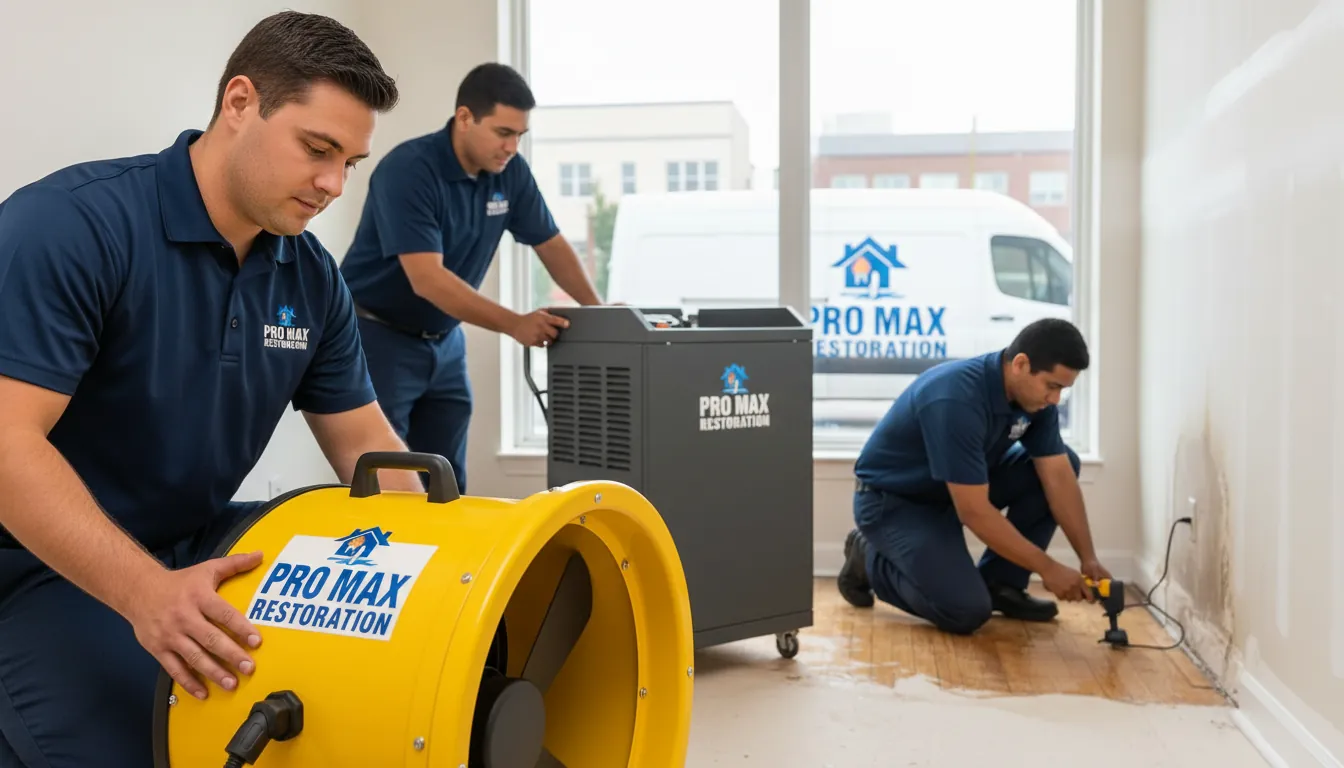
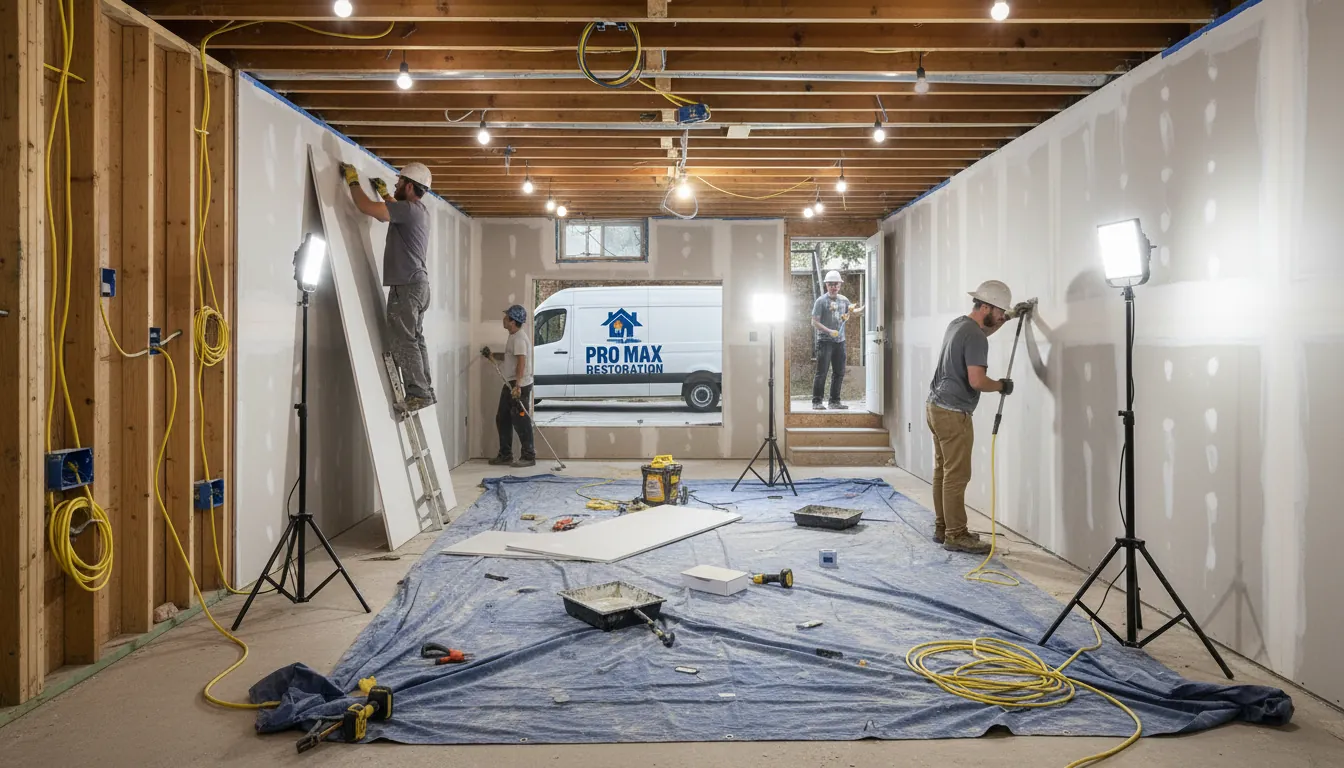
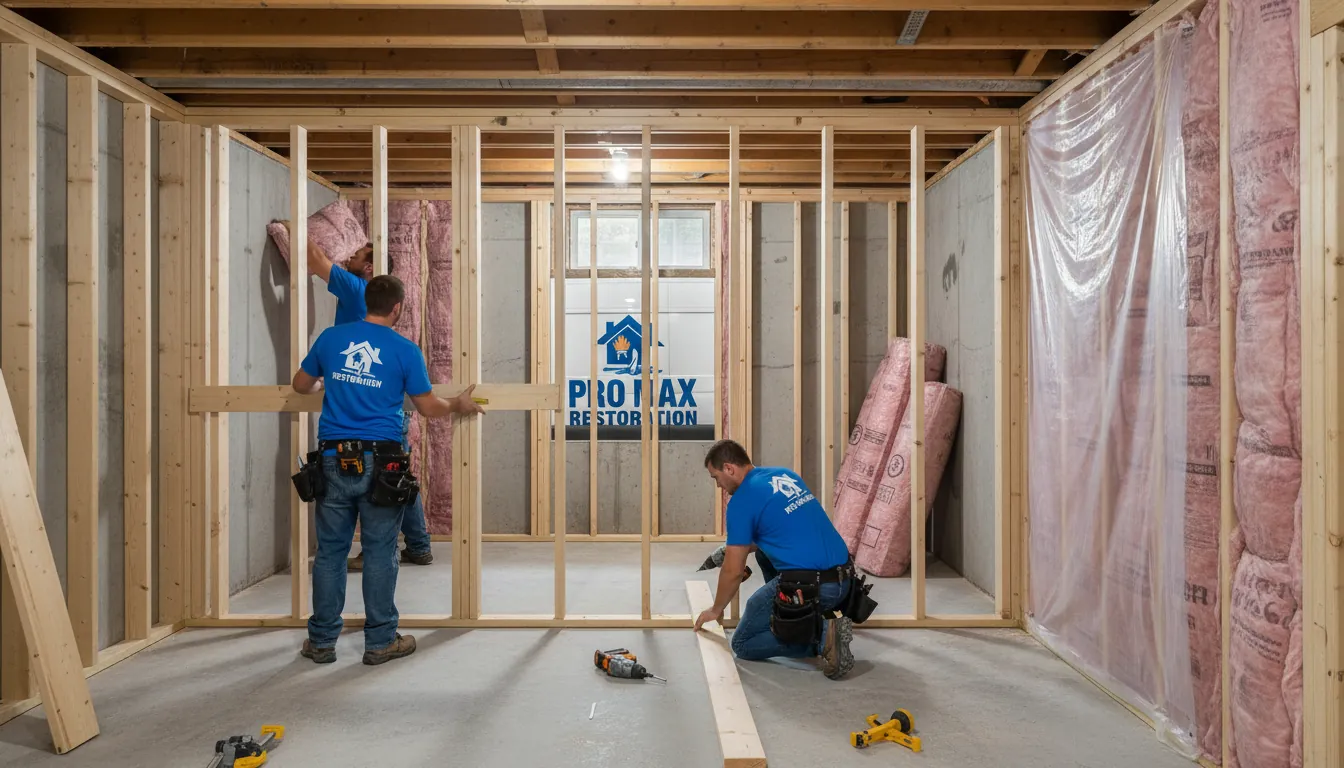
A look at real mold inspection & testing work completed by our IICRC-certified crews for homeowners in Toronto and across the Greater Toronto Area.
Complete Restoration Services in Toronto
One company for every emergency — from the first 45-minute response through complete rebuild.
When Toronto Properties Are Most at Risk
Water damage in the Greater Toronto Area is seasonal, and knowing which risk belongs to which month is the cheapest prevention there is. Here is the pattern we see across Torontoyear after year.
Winter
December – MarchFrozen and burst pipes
When temperatures fall below about -20C, water inside uninsulated supply lines freezes and expands, generating pressure that splits copper and PEX. Pipes in exterior walls, unheated garages and crawl spaces fail first, and the leak often runs for hours before anyone notices. This is our single busiest emergency window across Toronto.
Spring
March – MaySnowmelt and saturated ground
Rapid thaw combined with spring rain saturates the ground while it is still partly frozen, so water has nowhere to go but against foundations. Sump pumps run continuously, weeping tile that is cracked or clogged backs up, and any foundation crack in a Toronto home shows itself now.
Summer
June – SeptemberStorm surcharge and sewer backup
Short, intense thunderstorms overwhelm storm and combined sewers faster than they can drain. This is when sewer backups and overland flooding happen, and it is the season when a missing backwater valve costs Toronto homeowners the most.
Autumn
October – NovemberBlocked drainage and appliance failure
Leaves block eavestroughs, downspouts and window wells, sending roof water straight down the foundation. It is also when hot water tanks nearing the end of a 10 to 12 year life tend to let go, and when outdoor hose bibs left connected cause the first freeze-up.
The Standards We Work To
Our content is written and reviewed by the Pro Max Restoration technical team, the same IICRC-certified technicians who carry out water damage restoration, mold remediation and fire damage recovery across Toronto and the GTA every day. Guidance on this site reflects the IICRC S-500 and S-520 standards and what we see on real GTA properties, not generic advice.
IICRC S-500 Certified
The ANSI-approved Standard for Professional Water Damage Restoration. It governs how water losses are categorised, how structures are dried and how "dry" is verified with moisture readings rather than guesswork.
IICRC S-520 Certified
The ANSI-approved Standard for Professional Mold Remediation. It governs containment, negative air pressure, HEPA filtration, safe removal of affected materials and post-remediation verification.
Ontario O. Reg. 278/05 Compliant
Asbestos abatement is carried out to Ontario Ministry of Labour regulation O. Reg. 278/05, covering Type 1, 2 and 3 operations, air monitoring and disposal at licensed facilities.
Licensed & Fully Insured
We are a licensed and insured Ontario restoration contractor, and we carry the coverage required to work in occupied homes, condominiums and commercial properties.
Direct Insurance Billing
We bill Intact, Aviva, Desjardins, TD Insurance, Wawanesa, Co-operators and other major Canadian carriers directly, and we document every loss to the standard adjusters expect.
Calibrated Measurement, Not Guesswork
Every job uses FLIR thermal imaging and calibrated moisture meters, with daily readings logged until materials reach the IICRC dry standard. You receive that documentation.
How this guidance is written, measured and corrected: our editorial standards.
Mold Inspection & Testing in Toronto — Your Questions Answered
How much does mold inspection and testing cost in Toronto?
Do I need mold testing if I can already see mold?
What is the difference between air sampling and surface sampling?
How long do mold test results take?
What do mold air test results mean?
Should I get a mold inspection before buying a house in Toronto?
What is post-remediation clearance testing?
Need Mold Inspection & Testing in Toronto?
Call 416-988-3539 — IICRC-certified crews serving Toronto 24/7.