
Smoke Damage Cleanup & Odour Removal in Toronto
A small kitchen fire or a fire next door can leave soot and a lingering smoke smell through the whole house or condo. Pro Max Restoration responds across Toronto 24/7 in about 45 minutes to remove soot safely, clean contents and neutralize odour at the source instead of masking it.
Last updated:
Trusted Smoke Damage Cleanup in Toronto
Most smoke damage calls in Toronto do not involve a gutted house. They follow a pot left on the stove, a toaster oven fire, a candle that caught a curtain, an electrical fault in one room, or a fire in the condo unit or semi next door. The flames may have touched only a few square metres, but smoke carries soot and odour through every room, into closets and drawers, and through the ductwork. Soot is acidic, so it keeps etching metal, grout, plastics and painted surfaces while it sits, and the smell soaks into drywall, fabrics and insulation. Smoke damage cleanup is about removing that residue correctly and in the right order, before it sets and before well-meant scrubbing smears it deeper into porous surfaces.
Smoke follows air movement and temperature. It is drawn toward cooler surfaces, so it tends to collect on exterior walls, around windows and in closets, and it is pulled through return-air grilles into the furnace and ductwork. In Toronto condos, corridors are generally pressurized to limit smoke spread, yet smoke still migrates through gaps at suite doors, plumbing penetrations and shared shafts, so neighbours can find a film of soot and a strong smell in a suite that never saw flame. In older semis and row houses, smoke can travel through shared attic spaces and the gaps in party walls. We trace those paths so cleaning covers everywhere the smoke went, not just where it is obvious.
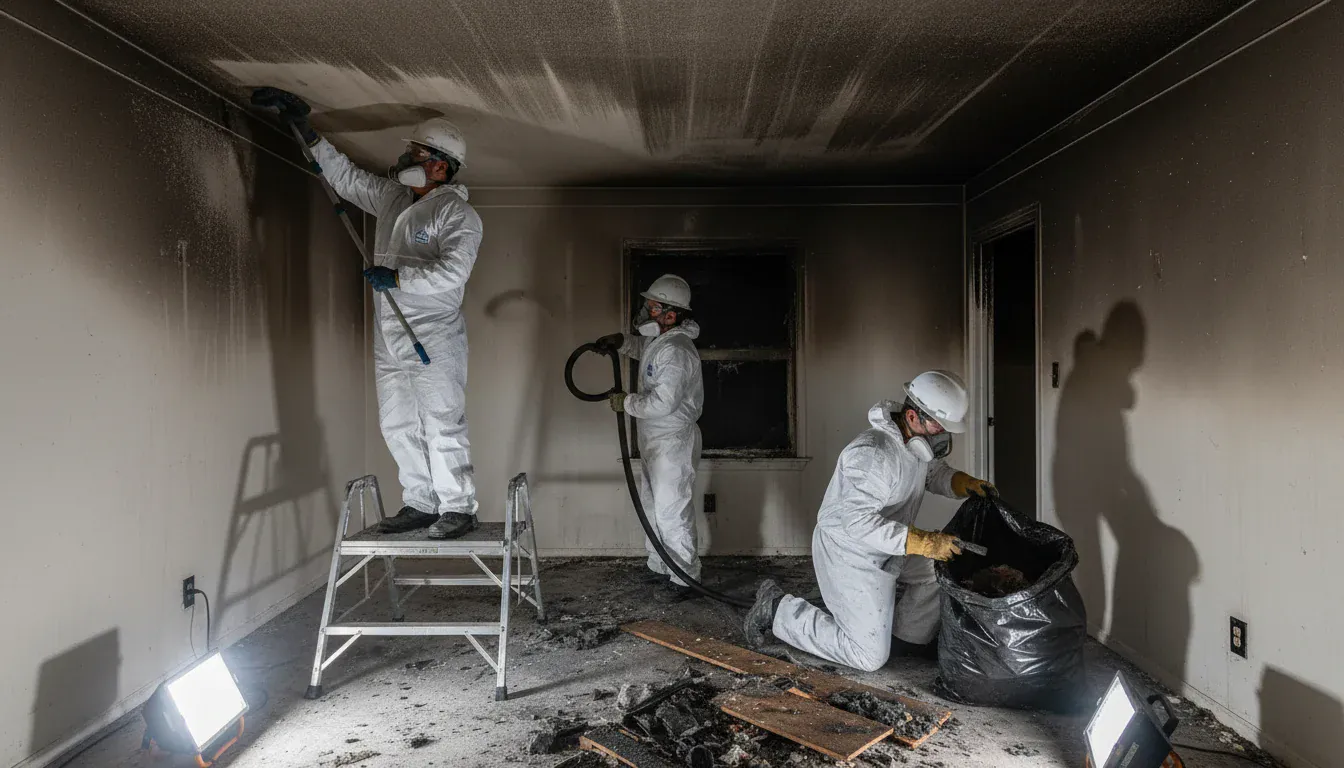
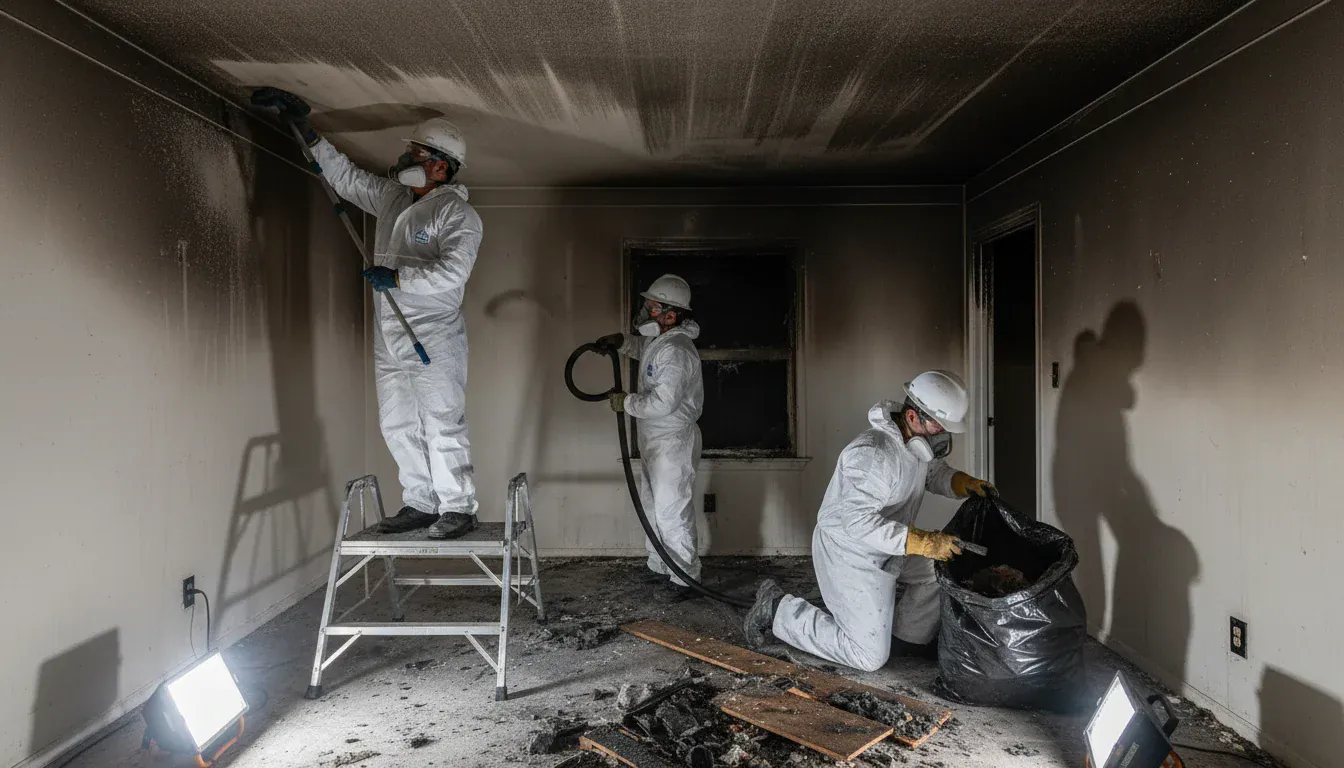
Our process starts with identifying the type of residue, because dry, wet, protein and fuel-oil soot each need different methods. We test-clean before committing to a method, remove loose soot with HEPA vacuums and dry chemical sponges, then wet-clean with detergents matched to the residue. Odour is treated at its source through cleaning, then neutralized with thermal fogging, hydroxyl generators or, in vacated spaces only, ozone, and sealed with an odour-blocking primer where needed. We clean or pack out contents, include the HVAC system in the scope, and document every item for your adjuster. We respond 24/7 in about 45 minutes, bill major insurers directly, and bring 15+ years and 600+ GTA projects to every job.
- We identify the residue type first, because dry, wet, protein and fuel-oil soot need different methods.
- HEPA vacuuming and dry soot sponges come before any wet cleaning, so soot is lifted rather than smeared.
- Odour treatment matched to the space: thermal fogging, hydroxyl, or ozone only in vacated areas.
- Contents cleaning and pack-out for clothing, furniture, dishes and household items.
- Photo inventory and scope documentation for your adjuster, with direct billing to major insurers.
- About 45-minute response 24/7 from our North York head office.
Common Causes of Fire & Smoke Damage in Toronto
After 600+ GTA restoration projects, we know exactly how Toronto homes are affected — and how to fix it for good.
Kitchen and Cooking Fires
Toronto Fire Services consistently identifies cooking as a leading cause of residential fires. Burned food and grease produce protein residue, a thin, yellowish, greasy film that is hard to see but carries a powerful, persistent odour. It coats cabinets, walls and ceilings well beyond the kitchen and has to be cleaned from every surface, not just the stove area.
Fires in a Neighbouring Condo or Semi
You do not need your own fire to have smoke damage. In condos, smoke moves through door gaps, plumbing penetrations and shafts into adjacent suites and corridors. In older semis and row houses it can travel through shared attics and party-wall gaps. Your own policy usually responds first, even though the fire started next door.
Furnace Puff-Backs and Electrical Faults
An oil furnace that misfires can blow a burst of oily soot through the ductwork into every room, leaving a sticky black film that ordinary cleaners smear. Electrical fires in panels, extension cords, dryers and small appliances burn plastics, producing a wet, smeary residue with a sharp, acrid smell.
Candles, Space Heaters and Smoking
Small, contained fires from candles and space heaters, and long-term indoor smoking, leave a film of soot or tar on walls, ceilings and fabrics. The damage looks minor but the odour penetrates drywall and upholstery, so cleaning usually has to be followed by sealing to keep the smell from coming back in humid weather.
Wildfire Smoke Episodes
In early June 2023, smoke from wildfires in Quebec and northern Ontario pushed Toronto's air quality into the high-risk range, and similar episodes have recurred since. Wildfire smoke rarely requires full restoration, but it can load furnace filters, leave fine dust on surfaces and a stale smell in homes where windows were open or ventilation ran continuously.
Many of these emergencies start as a flooded basement or a sewer backup, and standing water quickly leads to mold. Catching it fast is what protects your Toronto property — request a free quote or call us the moment you spot water.
Smoke Damage Cleanup in Toronto: Residue Types, Methods and Odour Control
Soot is not one material, and treating it as one is the most common reason smoke cleanup fails. Dry smoke residue comes from fast, hot fires burning paper and wood; it is powdery and relatively easy to remove with dry methods, but it slips into cracks. Wet smoke residue comes from slow, smouldering fires burning plastics, foam and rubber; it is sticky, smears easily and carries a sharp odour. Protein residue comes from burned food; it is nearly invisible, discolours paint and varnish, and has an unusually strong smell. Fuel-oil residue, most often from a furnace puff-back, is thick, black and oily. On a first visit we identify which types are present, often more than one, and test-clean small areas before choosing products and methods.
The order of cleaning matters as much as the method. Loose soot is removed first with HEPA vacuums and dry chemical sponges, because wiping with water or an all-purpose cleaner turns dry soot into a paste that is driven deeper into paint, grout and fabric. Work proceeds from ceilings down so debris is not dropped onto cleaned surfaces. Only then do we wet-clean with detergents suited to the residue, degreasers for protein and fuel-oil films, for instance. Time matters too: acidic soot can begin discolouring plastics and tarnishing metal fixtures within hours and keeps etching surfaces over the following days, so early stabilization, including removing heavy soot from chrome, stone and appliances, can be the difference between cleaning and replacement.
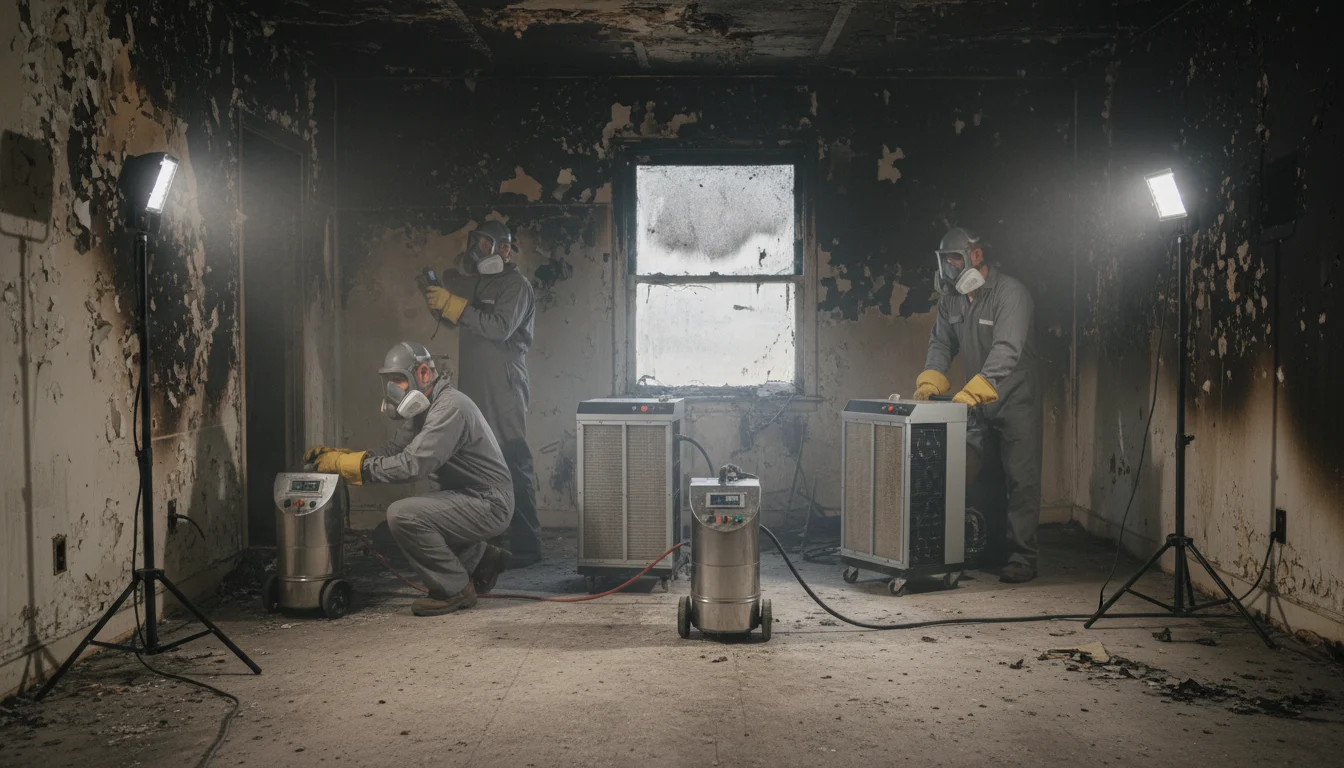
Smoke odour lingers because it is not only in the air. Combustion particles lodge inside porous materials such as drywall paper, insulation, carpet cushion, upholstery and unfinished wood, and they release odour again whenever heat or humidity rises, which is why a home can smell clean in January and smoky again in July. Effective odour control follows a sequence: clean to remove the source, run HEPA air scrubbers, neutralize with thermal fogging that penetrates like the original smoke or with hydroxyl or ozone treatment, and then seal porous surfaces that cannot be fully cleaned using a shellac-based or other odour-blocking primer. Skipping straight to fogging or fragrance without cleaning leaves the source in place and the smell returns.
Smoke follows hidden pathways, and a thorough scope follows them too. Return-air ducts pull smoke into the furnace, and the system then pushes residue into every room. Attics and wall cavities collect smoke through electrical and plumbing penetrations. In condos, smoke works its way through gaps at suite doors, garbage chutes and shared shafts, so a proper assessment includes corridors and adjoining suites where the property manager can arrange access. We also check behind appliances, inside cabinets and closets and above ceiling tiles in commercial spaces. Missing one of these pathways is a common reason owners notice a smoky smell weeks after a cleanup that looked complete.
Contents and documentation are the other half of smoke damage cleanup. Clothing, bedding and curtains can often be restored through specialized laundering, dishes and hard goods through hand cleaning, and furniture and electronics are assessed individually, with anything unsalvageable photographed and listed. Where cleaning cannot happen in the home, we pack out contents, inventory them and return them once the property is clean. Firefighting and sprinklers often leave water behind as well, so we check for moisture and dry to the IICRC S-500 standard to prevent mold. Every step is documented with photos and item lists for your adjuster, and we bill major Canadian insurers directly so you are not funding the cleanup while your claim is processed.
Wildfire Smoke and Toronto Homes: When Cleaning Is and Is Not Needed
The wildfire smoke that settled over Toronto in early June 2023 left many residents wondering whether their homes needed professional cleaning. In most cases they did not. Wildfire smoke that reaches the city has travelled hundreds of kilometres and arrives mostly as fine particulate and odour rather than the heavy, acidic soot left by a house fire. The usual fix is simple: replace the furnace filter, clean or replace HVAC filters and range hood filters, and wipe down window sills and surfaces that collected fine dust.
Professional cleaning is worth considering when a smoky smell persists after the air has cleared and filters have been changed, when windows were open for long periods and fine dust settled on soft furnishings, or when someone in the home is particularly sensitive. In those cases, HEPA vacuuming of upholstery and carpets, a thorough surface clean and an HVAC inspection usually resolve it without heavier odour treatment.
During future smoke events, keep windows closed, run your HVAC with a good-quality filter if you have one, and follow Environment and Climate Change Canada air quality alerts and Health Canada guidance on protecting your health. Anyone with symptoms or health concerns should consult a physician.
What to Do in the First Hours After a Small Fire or Smoke Event
Once the fire is out and the fire department has confirmed it is safe to re-enter, open windows only if outdoor air is clean, and turn the furnace or air conditioning off so the system does not keep circulating soot. Leave the HVAC off until filters have been changed and the ducts have been assessed.
Avoid the instinct to scrub. Do not wipe walls, ceilings or upholstery with water or household cleaners, and do not run a regular vacuum, which blows fine soot back into the air. Do not use electronics or appliances that were near the fire until they have been checked. Photograph every room and any visible damage before anything is moved, and throw out open food that was exposed to smoke or heat.
Then call your insurer and 416-988-3539. We will assess the residue, stabilize surfaces that are at risk from acidic soot, and plan cleaning, odour treatment and any contents pack-out, usually starting within about 45 minutes of your call.
Signs You Need Smoke Damage Cleanup in Toronto
Fire damage extends well beyond the burn area. Soot is acidic and keeps etching surfaces the longer it sits, so if you notice any of these in your Toronto property, call 416-988-3539 right away.
- Visible soot or smoke staining on walls, ceilings, trim or contents
- A persistent smoky or acrid smell that returns in humid weather
- Charring, blistered paint or heat-warped fixtures and finishes
- Standing water or saturated drywall left behind by firefighting
- Soot residue in ductwork, on vents, or spread into rooms away from the fire
- Etched or discoloured glass, metal fixtures and appliance surfaces
Emergency Smoke Damage Help in Toronto
Our IICRC-certified crews are on call 24 hours a day, 365 days a year and reach Toronto in about 45 minutes with the equipment to stop the damage immediately.
Our Smoke Damage Cleanup Process in Toronto
Every Toronto fire damage project follows the same proven process, from emergency board-up and soot removal through odour neutralisation and complete rebuild.
Emergency Call & Property Securing
Call us any hour and we dispatch to Toronto immediately. Our first priority once the fire service clears the building is emergency board-up and roof tarping, so the property is protected from weather, theft and further loss while the claim gets underway.
Damage Assessment & Documentation
We survey the structure, map how far the smoke and soot travelled through your Toronto property, and photograph everything. Smoke migrates far beyond the burn area through cavities and ductwork, so an accurate scope early is what keeps your insurance claim complete.
Water Extraction & Structural Drying
Firefighting almost always leaves significant water behind. We extract it and dry the structure to the IICRC S-500 standard, because water left in wall cavities after a fire is what turns a fire claim into a mold claim a few weeks later.
Soot & Smoke Residue Removal
Soot is acidic and etches glass, metal and finishes the longer it sits, so speed matters. We clean surfaces using HEPA vacuuming and specialised soot sponges and chemical sponges, matched to whether the residue is dry, wet, protein or fuel based.
Odour Neutralisation
We neutralise smoke odour at the molecular level using thermal fogging, hydroxyl and ozone treatment rather than masking it with fragrance. Sealing is applied where residue has penetrated framing, so the smell does not return in humid weather.
Contents Restoration & Full Rebuild
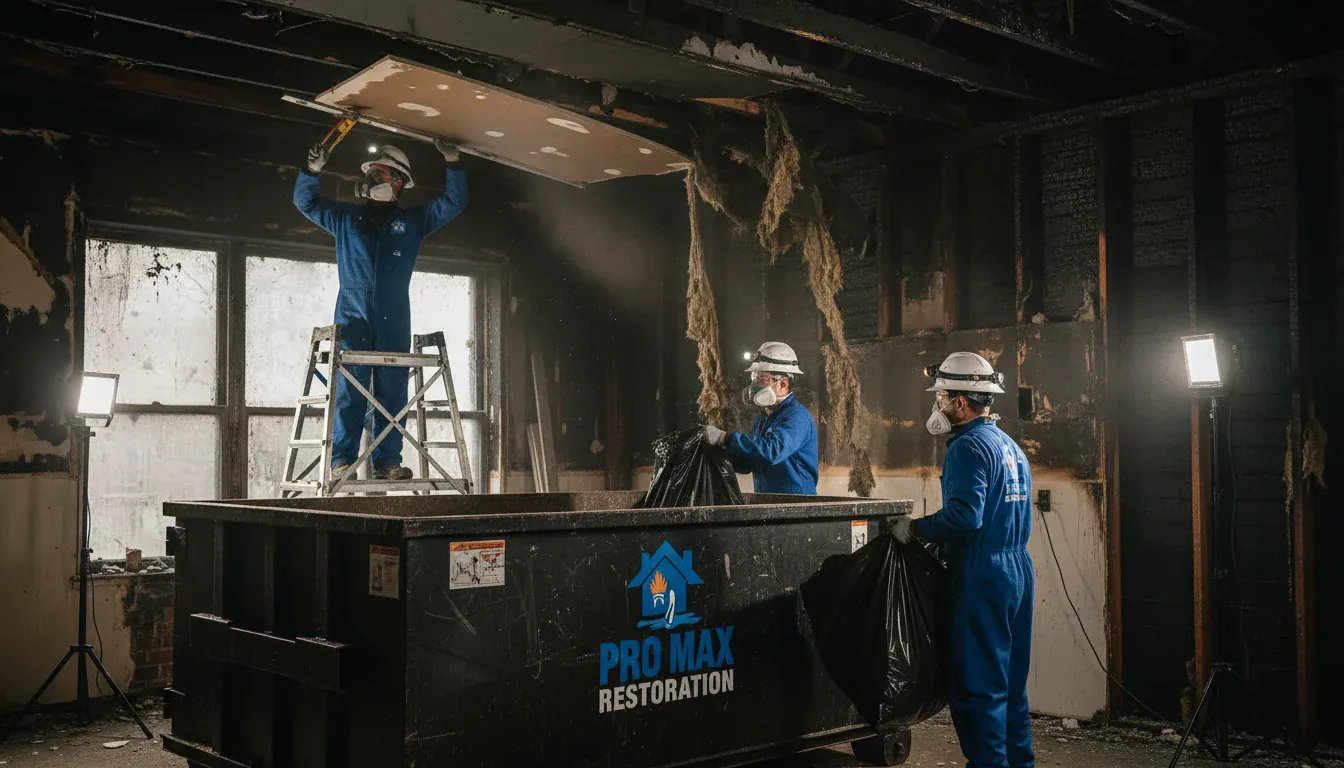
Salvageable contents are cleaned, deodorised and stored, and our in-house construction team rebuilds your Toronto property to pre-loss condition. We document the full scope and bill your insurer directly throughout.
Why Toronto Property Owners Choose Pro Max for Smoke Damage Cleanup
15+ years, 600+ restored GTA properties and a perfect 5-star Google rating, backed by the certifications and insurance relationships that matter when it is your home on the line.
IICRC-Certified Technicians
Every Toronto job is led by technicians certified to the IICRC S-500 water damage and S-520 mold remediation standards, the benchmarks Canadian insurers recognise and expect.
45-Minute Emergency Response
We answer the phone 24 hours a day, 365 days a year and reach Toronto properties in about 45 minutes, because the first 24 to 48 hours decide whether materials are dried and saved or demolished and replaced.
Direct Insurance Billing
We document every loss with photographs and moisture readings and bill Intact, Aviva, Desjardins, TD Insurance, Wawanesa, Co-operators and all other major Canadian carriers directly, so covered work costs you nothing beyond your deductible.
One Company, Start to Finish
Emergency extraction, structural drying, mold prevention and the complete rebuild are all handled in-house. One company, one warranty and no coordinating three different contractors while your Toronto home sits damaged.
15+ Years and 600+ Properties
We have restored more than 600 properties across the Greater Toronto Area since 2009 and hold a perfect 5.0 Google rating, so you are trusting your Toronto home to a team that has genuinely seen it all.
Written Estimates, No Surprises
You receive a clear, itemised written estimate before work begins, and we review the scope directly with your adjuster so there are no disputed line items or unexpected costs at the end of the project.
Smoke Damage Cleanup Service Areas Across Toronto
We provide fast, 24/7 smoke damage cleanup in every Toronto neighbourhood, including:
Recent Smoke Damage Cleanup Projects in Toronto
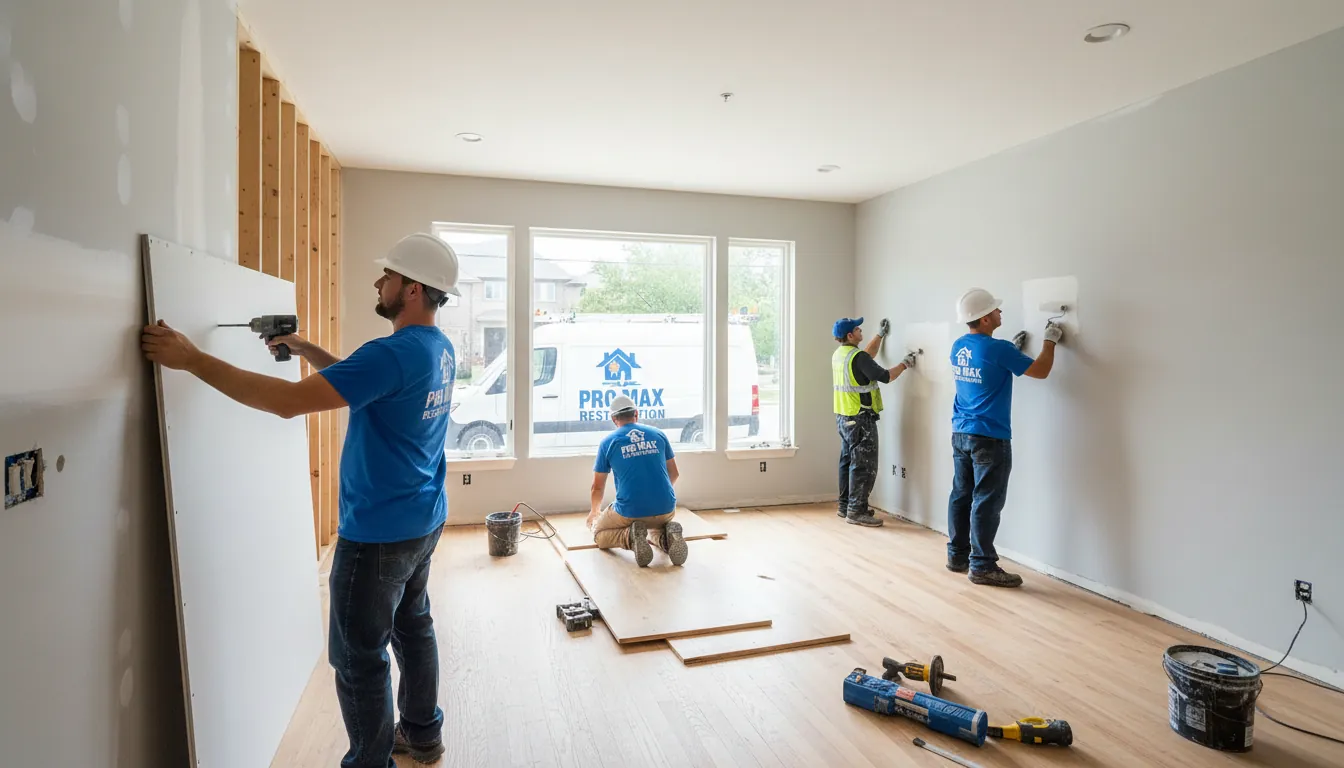
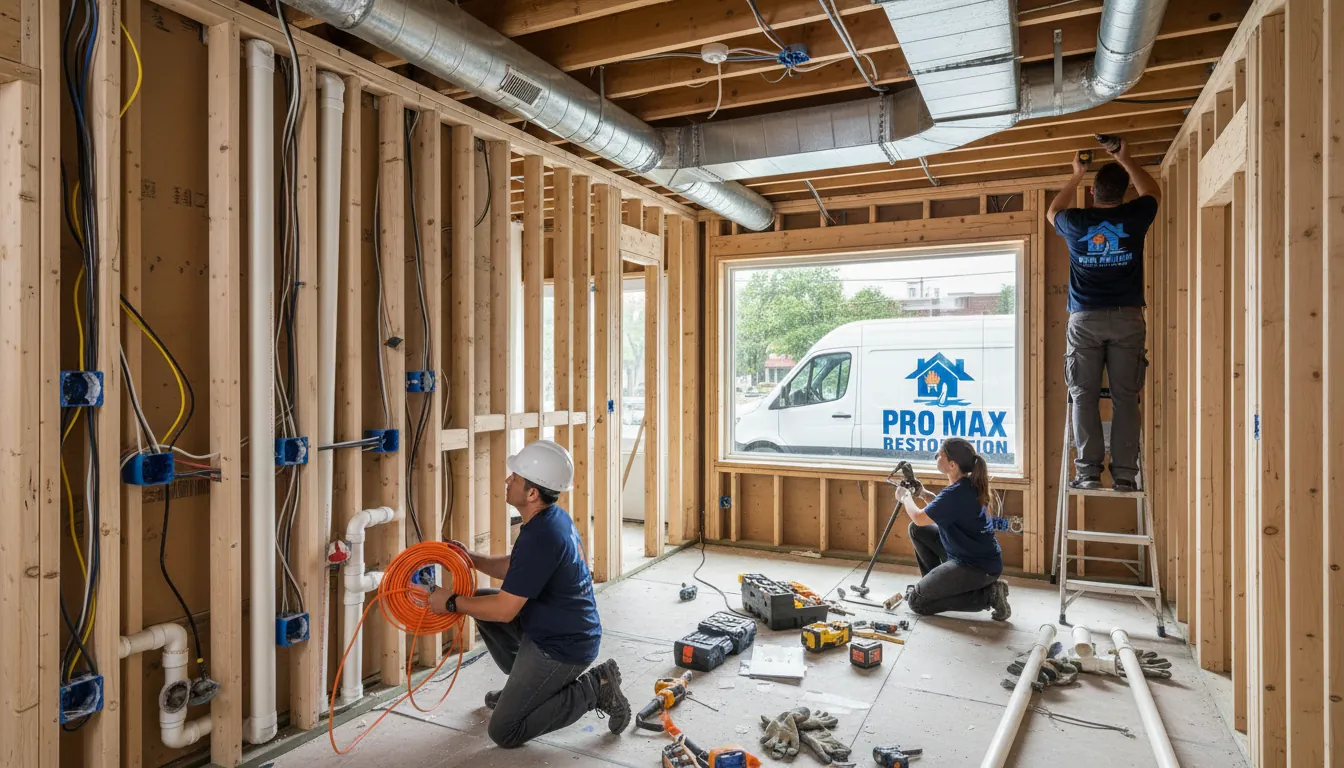
A look at real smoke damage cleanup work completed by our IICRC-certified crews for homeowners in Toronto and across the Greater Toronto Area.

Complete Restoration Services in Toronto
One company for every emergency — from the first 45-minute response through complete rebuild.
When Toronto Properties Are Most at Risk
Water damage in the Greater Toronto Area is seasonal, and knowing which risk belongs to which month is the cheapest prevention there is. Here is the pattern we see across Torontoyear after year.
Winter
December – MarchFrozen and burst pipes
When temperatures fall below about -20C, water inside uninsulated supply lines freezes and expands, generating pressure that splits copper and PEX. Pipes in exterior walls, unheated garages and crawl spaces fail first, and the leak often runs for hours before anyone notices. This is our single busiest emergency window across Toronto.
Spring
March – MaySnowmelt and saturated ground
Rapid thaw combined with spring rain saturates the ground while it is still partly frozen, so water has nowhere to go but against foundations. Sump pumps run continuously, weeping tile that is cracked or clogged backs up, and any foundation crack in a Toronto home shows itself now.
Summer
June – SeptemberStorm surcharge and sewer backup
Short, intense thunderstorms overwhelm storm and combined sewers faster than they can drain. This is when sewer backups and overland flooding happen, and it is the season when a missing backwater valve costs Toronto homeowners the most.
Autumn
October – NovemberBlocked drainage and appliance failure
Leaves block eavestroughs, downspouts and window wells, sending roof water straight down the foundation. It is also when hot water tanks nearing the end of a 10 to 12 year life tend to let go, and when outdoor hose bibs left connected cause the first freeze-up.
The Standards We Work To
Our content is written and reviewed by the Pro Max Restoration technical team, the same IICRC-certified technicians who carry out water damage restoration, mold remediation and fire damage recovery across Toronto and the GTA every day. Guidance on this site reflects the IICRC S-500 and S-520 standards and what we see on real GTA properties, not generic advice.
IICRC S-500 Certified
The ANSI-approved Standard for Professional Water Damage Restoration. It governs how water losses are categorised, how structures are dried and how "dry" is verified with moisture readings rather than guesswork.
IICRC S-520 Certified
The ANSI-approved Standard for Professional Mold Remediation. It governs containment, negative air pressure, HEPA filtration, safe removal of affected materials and post-remediation verification.
Ontario O. Reg. 278/05 Compliant
Asbestos abatement is carried out to Ontario Ministry of Labour regulation O. Reg. 278/05, covering Type 1, 2 and 3 operations, air monitoring and disposal at licensed facilities.
Licensed & Fully Insured
We are a licensed and insured Ontario restoration contractor, and we carry the coverage required to work in occupied homes, condominiums and commercial properties.
Direct Insurance Billing
We bill Intact, Aviva, Desjardins, TD Insurance, Wawanesa, Co-operators and other major Canadian carriers directly, and we document every loss to the standard adjusters expect.
Calibrated Measurement, Not Guesswork
Every job uses FLIR thermal imaging and calibrated moisture meters, with daily readings logged until materials reach the IICRC dry standard. You receive that documentation.
How this guidance is written, measured and corrected: our editorial standards.
Smoke Damage Cleanup in Toronto — Your Questions Answered
How do you get the smoke smell out of a house?
Is it safe to stay in a house with smoke damage?
Can smoke-damaged items be cleaned, or do they need to be replaced?
Does insurance cover smoke damage from a neighbour’s fire?
Is ozone safe for smoke odour removal?
How long does smoke damage cleanup take?
Do I need duct cleaning after smoke damage?
Need Smoke Damage Cleanup in Toronto?
Call 416-988-3539 — IICRC-certified crews serving Toronto 24/7.