
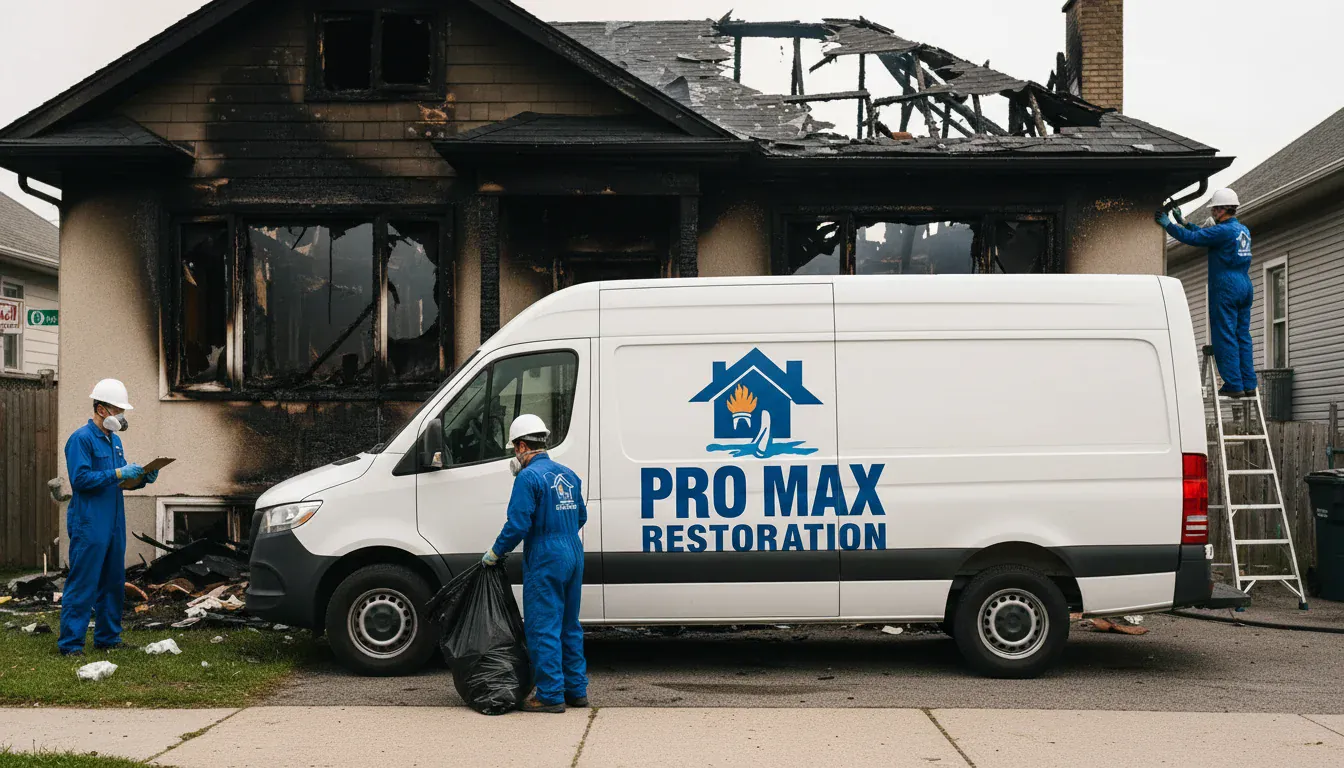
Fire Damage Restoration in Toronto
Comprehensive 24/7 fire damage restoration across the GTA. Emergency board-up, smoke removal, and complete structural rebuild by IICRC-certified experts.
Last updated:
Years Experience
Projects Completed
Minute Response
Google Rating
What Our Fire Damage Restoration Service Includes
Every fire damage restoration project is unique — here's the full scope of what we handle for Toronto and GTA properties.
Fire Damage Restoration in Action
See our certified team delivering professional fire damage restoration services across Toronto and the GTA.
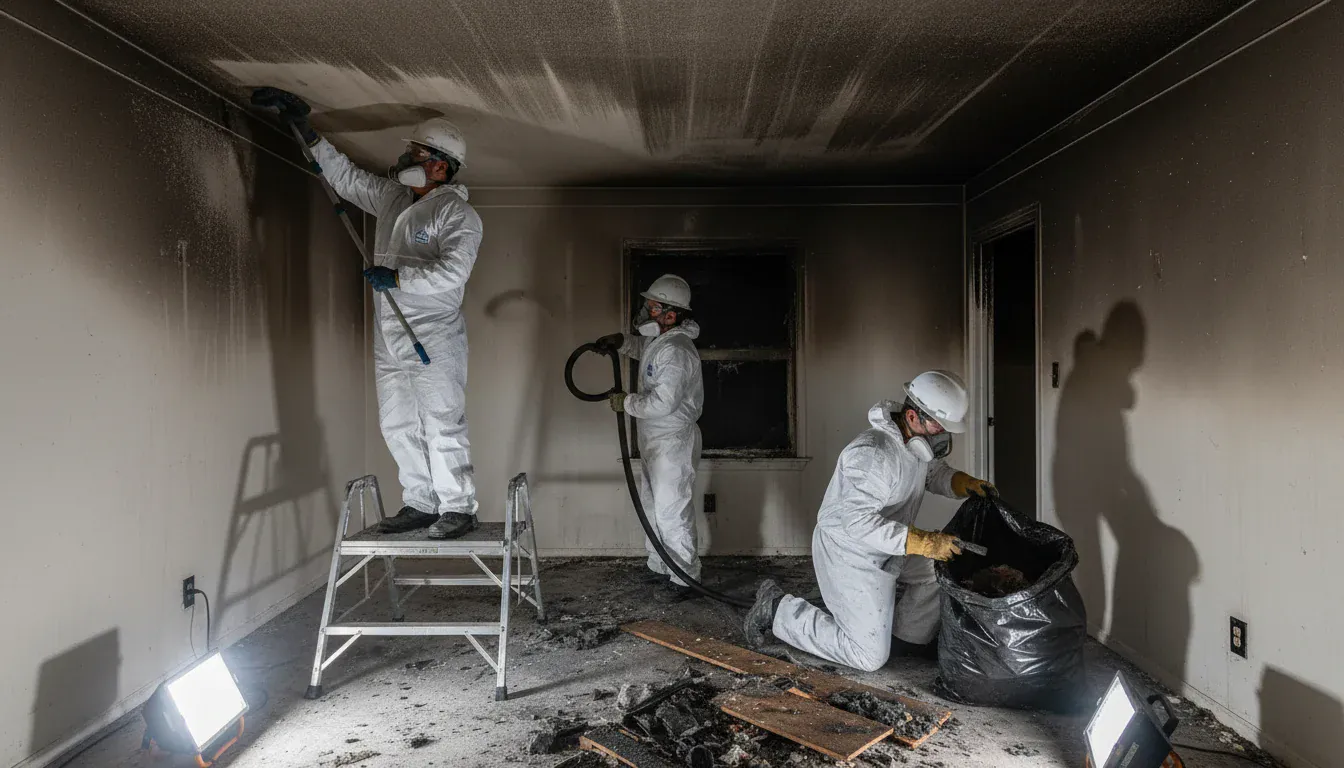
Our Fire Damage Restoration Process
Step-by-step breakdown of how our team handles fire damage restoration from initial call to final walkthrough.
Emergency Response & Securing
Our team arrives within 45 minutes to assess safety, board up exposed areas, tarp damaged roofing, and prevent further damage from weather, vandalism, or structural collapse. We coordinate with fire investigators as needed.
Damage Assessment
Our certified technicians perform a comprehensive assessment of fire, smoke, soot, and water damage throughout the property. We use thermal imaging and moisture meters to identify hidden damage behind walls and in structural cavities.
Water Removal & Drying
Firefighting efforts often leave significant water damage. We extract all standing water, deploy industrial dehumidifiers and air movers, and monitor moisture levels until the structure reaches safe drying standards.
Smoke & Soot Removal
Using specialized equipment and cleaning agents, we remove smoke residue and soot from walls, ceilings, surfaces, and belongings. Different fire types (protein, synthetic, natural) require specific cleaning approaches — we match the method to the damage.
Odour Elimination & Air Quality
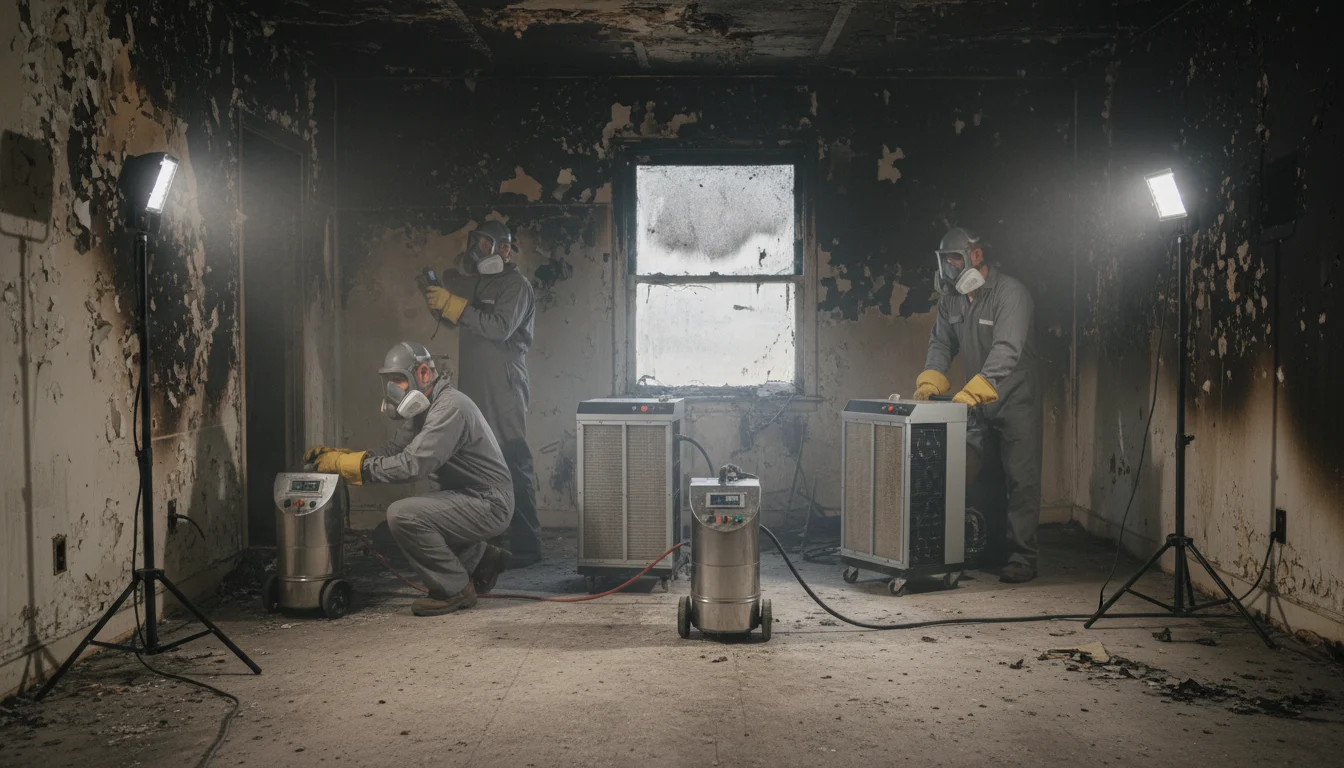
Smoke odour penetrates deep into materials. We use thermal fogging, ozone treatment, hydroxyl generators, and HEPA air scrubbers to completely eliminate smoke odours — not just mask them. HVAC ducts are fully cleaned and sealed.
Restoration & Rebuild
We rebuild all fire-damaged areas to pre-loss condition or better — structural framing, drywall, flooring, painting, cabinetry, and fixtures. As a full-service restoration company, we handle the complete rebuild under one roof with direct insurance billing.
Not All Soot Is the Same: Residue Types & Cleaning Methods
The single most expensive mistake in fire restoration is applying the wrong cleaning method to the wrong residue. Identifying the soot type before anything is touched is what keeps materials in the clean column rather than the replace column.
Protein Residue
Typical source: Kitchen and cooking fires
- Appearance:
- Nearly invisible, yellowish-brown, greasy to the touch
- Odour:
- Intense, pervasive, worsens with heat and humidity
How we clean it:
Degreasing agents and enzyme cleaners, applied wet. Surfaces are cleaned inside cabinets and drawers as well as outside, because the film coats everything in the air path.
Synthetic (Dry Smoke) Residue
Typical source: Furniture, electronics, plastics, carpet
- Appearance:
- Heavy, black, dry and powdery; smears badly if wetted
- Odour:
- Sharp, chemical, clings to porous materials
How we clean it:
Dry chemical sponges and HEPA vacuuming FIRST, in every case. Any moisture applied before dry removal drives the residue permanently into drywall, grout and upholstery.
Natural Material Residue
Typical source: Wood, paper, fabric, natural fibres
- Appearance:
- Light grey to black, fine and powdery
- Odour:
- Campfire-like; travels furthest through the building
How we clean it:
HEPA vacuuming and dry sponging, followed by wet cleaning of hard surfaces. Easiest residue to remove but the widest distribution, so the cleaning scope is usually whole-home.
Fuel Oil Soot (Furnace Puff-Back)
Typical source: Oil furnace misfire or puff-back
- Appearance:
- Oily black film distributed through every supply register
- Odour:
- Strong petroleum odour throughout the home
How we clean it:
Full HVAC duct cleaning and decontamination alongside surface cleaning. Because the system distributed it, treating rooms without treating the ductwork guarantees recontamination.
What Happens Week by Week After a Fire
A fire loss is four projects stacked on top of each other. Here is the sequence we run, and why the order matters.
Emergency dispatch and board-up
Crew on site to tarp roofing, board openings and secure the property against weather, animals and intrusion. Damage from an unsecured building is not part of your original loss, so this is the cheapest and most urgent money on the project.
Assessment and moisture mapping
Thermal imaging and calibrated moisture meters map where firefighting water travelled. Soot is classified room by room so the correct cleaning method is applied to each residue type. The scope and photographic record for the adjuster is built here.
Water extraction and structural drying
Standing water is extracted and the structure dried to the IICRC S-500 standard with readings logged daily. Skipping this converts a fire loss into a mold loss within days, and it is the most common reason a fire job goes wrong.
Soot removal and contents pack-out
Surfaces are cleaned by residue type. Contents that cannot be cleaned on site are inventoried, packed out to a controlled facility and treated by category — textiles, electronics, documents and hard goods each differently.
HVAC decontamination and odour treatment
Ductwork is cleaned and sealed, then thermal fogging, hydroxyl generators or ozone neutralise remaining odour compounds. Deodorising before the source material is removed does not work, so this stage is deliberately late.
Reconstruction
Framing, drywall, electrical and plumbing repair, flooring, trim, cabinetry, paint and final finishing — carried out by the same company under the same contract, so nothing is lost in a handoff between cleaning and rebuild.
Fire Damage Restoration Cost Guide — Toronto & GTA (2026)
Planning estimates for the Toronto market, not quotes. Soot type, how far smoke travelled and how much material is replaced rather than cleaned are the main drivers.
| Scenario | Typical scope | Estimated cost |
|---|---|---|
| Emergency board-up | Tarping, boarding, securing openings | $500 – $2,500 |
| Smoke & odour only | One or two rooms, no structural damage | $1,500 – $4,500 |
| Contained kitchen fire | Whole-home smoke migration, duct cleaning | $5,000 – $15,000 |
| Single-room with rebuild | Structural repair and reconstruction | $15,000 – $40,000 |
| Multi-room / multi-storey | Full reconstruction | $50,000 – $150,000+ |
Full breakdown, including contents pack-out, HVAC decontamination and odour treatment, is in our Toronto fire damage restoration cost guide.
The Three Parts of a Fire Insurance Claim
Fire claims are settled in three separate buckets. Knowing which is which is how homeowners avoid being underpaid on the one that matters most to them.
Structure (Dwelling)
Covers repair and reconstruction of the building itself — framing, drywall, roofing, flooring, mechanical systems and finishes. Fire is a standard covered peril on virtually every Ontario home, condo and tenant policy, and firefighting water damage is covered alongside it.
Contents
Covers belongings, and is the most commonly under-documented part of a fire claim. Coverage may be actual cash value or replacement cost depending on your wording, and the difference is substantial. A professional pack-out inventory is what ensures this portion reflects what you actually owned.
Additional Living Expenses
Covers hotel or temporary rental accommodation and reasonable increased costs while the home is unlivable. Keep every receipt from the first night and notify your insurer immediately so an advance can be arranged. This is separate from structure and contents.
Pro Max Restoration bills Intact, Aviva, Desjardins, TD Insurance, Wawanesa, Co-operators and other major Canadian carriers directly, and documents the loss with photographs, contents inventories and moisture readings to the standard adjusters expect — so you are not funding a five-figure restoration while a claim is processed. We handle fire losses across the GTA, including Scarborough, Mississauga, Vaughan, Brampton and Markham, plus smoke damage cleanup across Toronto.
Fire Damage Restoration Questions & Answers
Common questions Toronto homeowners ask about our fire damage restoration services.
Q. What should I do immediately after a fire?
Once the fire department clears the building, don't re-enter until it's declared safe, and avoid touching soot-covered surfaces. Call 416-988-3539 — we provide 24/7 emergency board-up and tarping to secure the property and prevent further weather and theft damage.
Q. Can smoke and soot damage be cleaned?
Often, yes. Soot is acidic and etches surfaces over time, so fast action matters. We clean and deodorise salvageable contents and structures using HEPA vacuuming, specialised soot sponges, thermal fogging and ozone treatment to neutralise odour at the source rather than masking it.
Q. Do you also fix the water damage from firefighting?
Yes. Firefighting almost always leaves significant water damage. Our IICRC-certified team extracts the water and dries the structure as part of the same project, preventing the secondary mold problems that fire jobs often create.
Q. How long does fire restoration take?
It depends on severity — light smoke cleanups can take days, while structural rebuilds run several weeks. After assessment we give you a clear timeline and handle everything from cleanup through full reconstruction in-house.
Q. Will my insurance cover fire damage?
Fire and smoke damage is covered under virtually every Ontario home and commercial policy. We document the full scope, work directly with your adjuster, and bill the insurer so your recovery is as smooth as possible.
Q. What happens to my belongings that were damaged by smoke and soot?
Belongings damaged by smoke and soot are inventoried and sorted into items that can be professionally cleaned and deodorized and items that are too damaged to restore. Textiles, electronics, and hard surfaces often respond well to specialized cleaning and odor treatment, while heavily charred items are documented with photos for your insurance claim before disposal.
Q. What happens if you find structural damage once fire restoration work begins?
If we find structural damage, such as compromised framing or subfloor, once fire restoration work begins, we stop, document it with photos, and bring in the demolition and rebuild side of our team to scope repairs. Since we handle everything from emergency response through complete rebuild, this can typically be added to the same project rather than requiring a separate contractor.
Q. Can I stay in my home during fire and smoke damage restoration?
It depends on the extent of the fire, since areas with structural damage, heavy soot, or unsafe air quality need to be vacated until they are cleaned and cleared. Smaller, contained fires may allow you to stay in unaffected parts of the home, and we will always tell you plainly whether your Toronto or GTA property is safe to occupy.
Q. What equipment do you use to remove smoke odor from a home?
We remove smoke odor using HEPA air scrubbers, thermal fogging, and ozone or hydroxyl generators, depending on how deeply smoke has penetrated walls, flooring, and contents. Surfaces are cleaned and sealed where needed rather than just masked with fragrance, since the goal is to eliminate the odor source, not cover it up temporarily.
Q. Do you provide emergency board up service on weekends and holidays?
Yes, we provide emergency board up and tarping service every day of the year, including weekends and holidays, to secure your property immediately after a fire. Call 416-988-3539 and a crew can typically be on site within about 45 minutes to board up windows and doors and protect your Toronto or GTA property from further damage or weather exposure.
Q. What should I not touch after a fire?
Do not wipe soot with a damp cloth, because dry synthetic soot smears permanently into drywall, grout and upholstery and turns cleanable surfaces into replacement items. Do not run the furnace or air conditioning, which distributes soot through every duct into unaffected rooms. Do not eat food or use cosmetics or medications exposed to smoke, and do not use electrical appliances until they have been inspected.
Q. How long does smoke odour take to remove after a fire?
Odour treatment itself usually takes one to three days, but it only works once the source material is gone. Fogging a house that still contains soot-laden insulation or a contaminated duct system achieves nothing, because the source keeps re-releasing odour compounds. Removing unsalvageable porous materials, cleaning everything restorable and cleaning the HVAC system comes first, after which thermal fogging, hydroxyl generators or ozone treatment neutralise what remains.
Q. Can electronics and appliances be saved after a fire?
Often yes, and they should be assessed rather than discarded. Soot is acidic and conductive, so it continues corroding circuit boards and contacts for as long as it sits, which makes speed important. Specialist cleaning recovers many devices, but nothing should be powered on until it has been professionally inspected, because residue inside a unit can cause a short. Items are documented and inventoried for your claim either way.
Q. What is additional living expenses coverage and how do I claim it?
Additional living expenses coverage pays for reasonable extra costs while your home is unlivable, typically hotel or temporary rental accommodation, and the difference between normal and increased food costs. It is a standard part of most Ontario home policies and is separate from the structure and contents portions of the claim. Keep every receipt from the first night, and notify your insurer immediately so an advance can be arranged.
Q. Does a fire always cause water damage too?
Almost always. Suppressing a structure fire puts a very large volume of water into the building in a short time, and it runs downward through floor assemblies into rooms that never saw flame. That water must be extracted and the structure dried to the IICRC S-500 standard, or the fire loss becomes a mold remediation job within days. Water extraction and structural drying are a normal line item on fire restoration estimates.
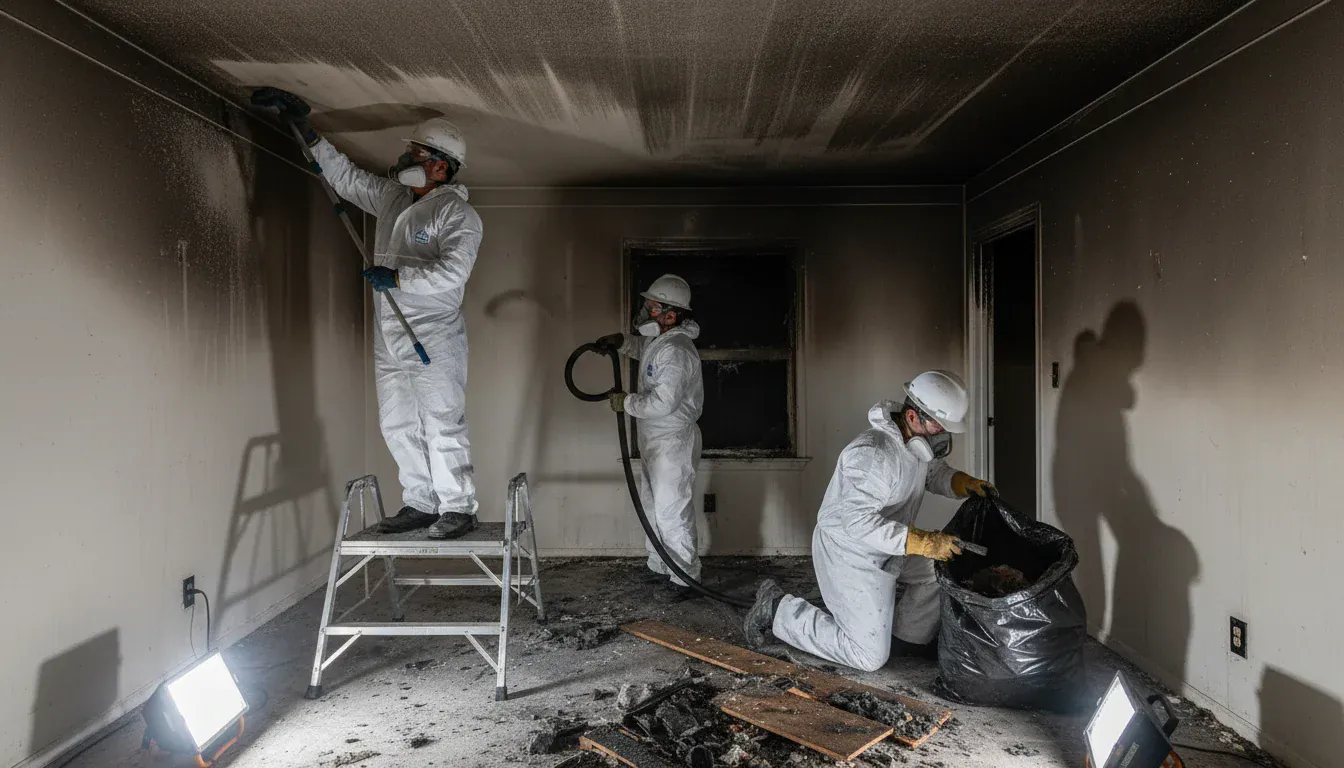
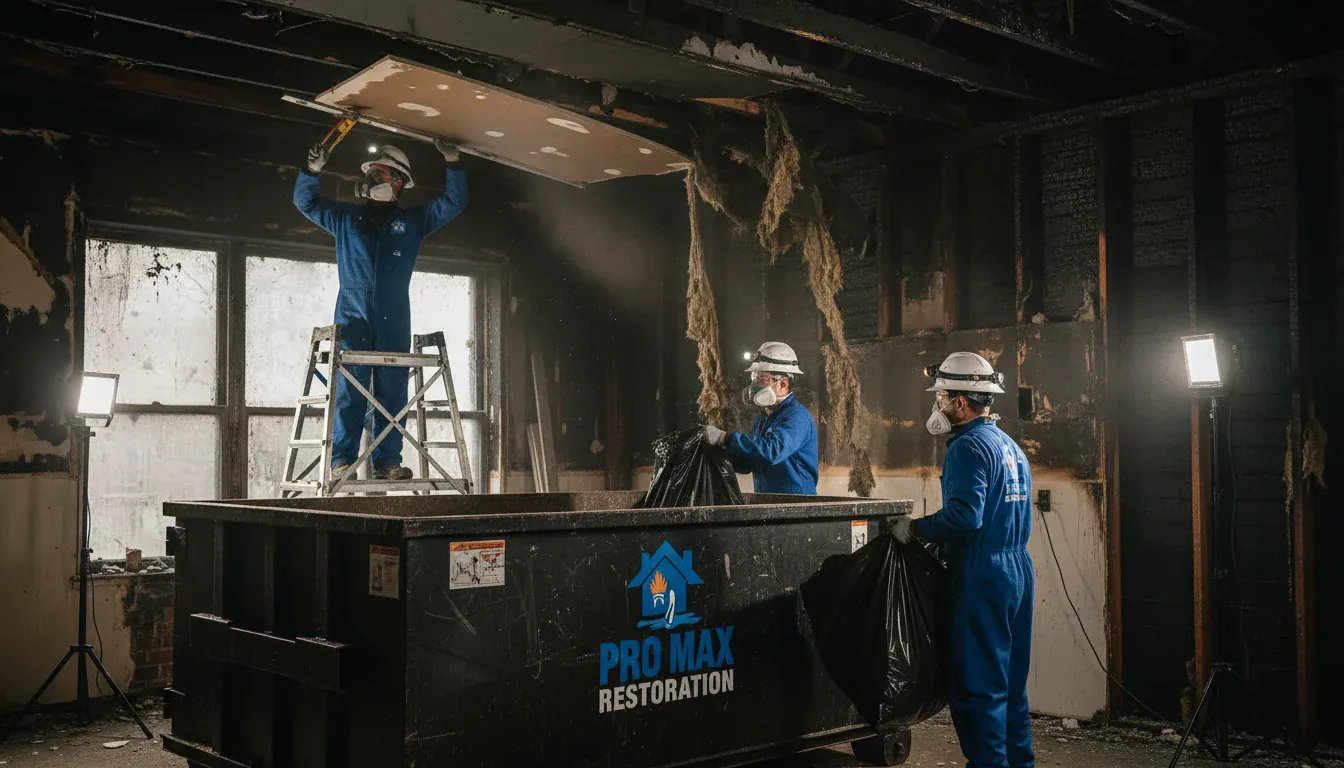
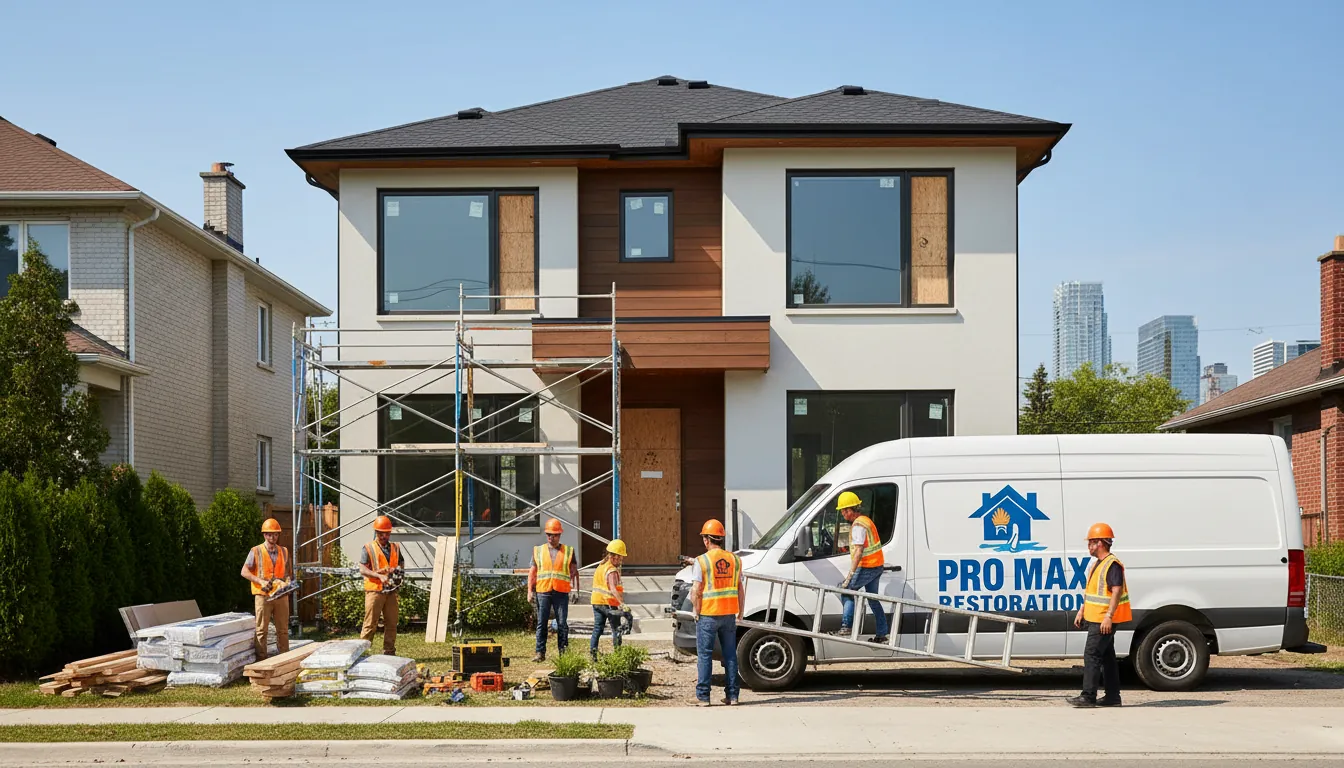
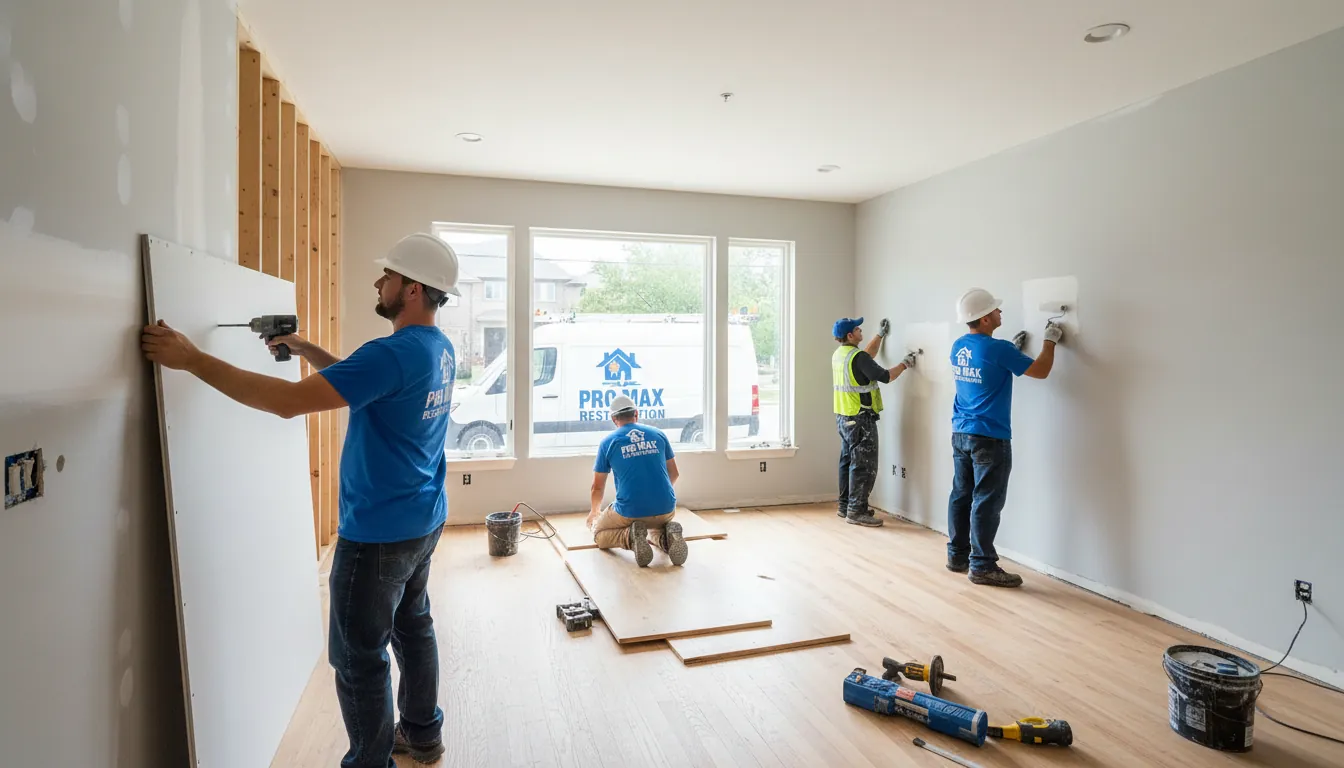
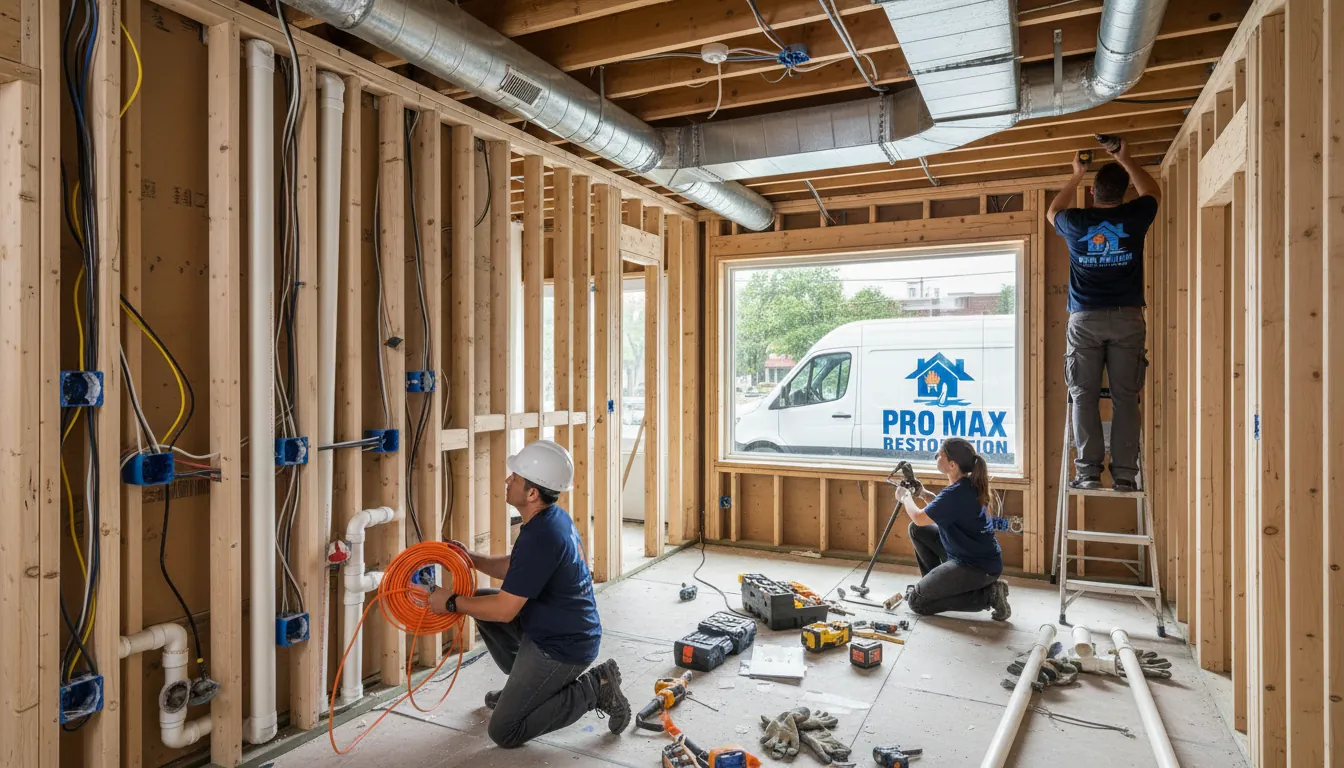
Recent Fire Damage Restoration Projects Across Toronto & the GTA
A look at real fire damage restoration work completed by our IICRC-certified crews across Toronto and the Greater Toronto Area.
The Standards We Work To
Our content is written and reviewed by the Pro Max Restoration technical team, the same IICRC-certified technicians who carry out water damage restoration, mold remediation and fire damage recovery across Toronto and the GTA every day. Guidance on this site reflects the IICRC S-500 and S-520 standards and what we see on real GTA properties, not generic advice.
IICRC S-500 Certified
The ANSI-approved Standard for Professional Water Damage Restoration. It governs how water losses are categorised, how structures are dried and how "dry" is verified with moisture readings rather than guesswork.
IICRC S-520 Certified
The ANSI-approved Standard for Professional Mold Remediation. It governs containment, negative air pressure, HEPA filtration, safe removal of affected materials and post-remediation verification.
Ontario O. Reg. 278/05 Compliant
Asbestos abatement is carried out to Ontario Ministry of Labour regulation O. Reg. 278/05, covering Type 1, 2 and 3 operations, air monitoring and disposal at licensed facilities.
Licensed & Fully Insured
We are a licensed and insured Ontario restoration contractor, and we carry the coverage required to work in occupied homes, condominiums and commercial properties.
Direct Insurance Billing
We bill Intact, Aviva, Desjardins, TD Insurance, Wawanesa, Co-operators and other major Canadian carriers directly, and we document every loss to the standard adjusters expect.
Calibrated Measurement, Not Guesswork
Every job uses FLIR thermal imaging and calibrated moisture meters, with daily readings logged until materials reach the IICRC dry standard. You receive that documentation.
How this guidance is written, measured and corrected: our editorial standards.
Restoration Services Across the GTA
We respond to emergencies in 45 minutes across the Greater Toronto Area. Explore our dedicated city pages or request a free quote.
Fire Damage Emergency? Call Now for Immediate Response
Our certified technicians arrive on-site within 45 minutes. Don't wait—call now for immediate assistance.